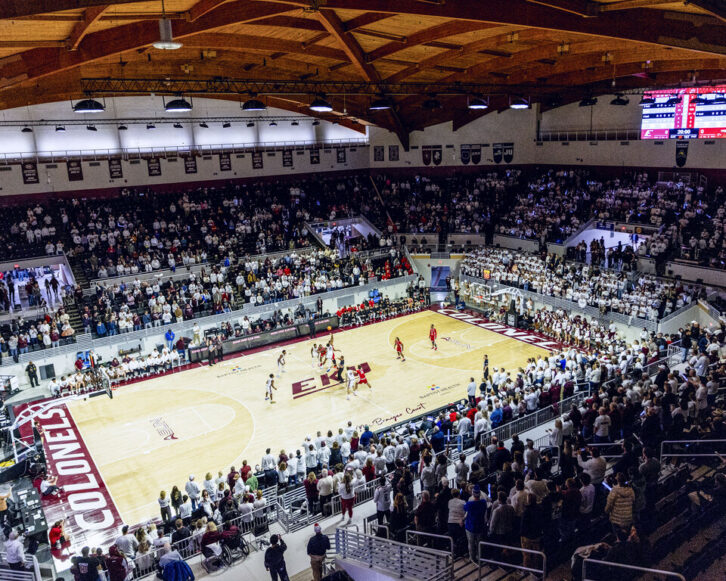
Eastern Kentucky University (EKU) made the move from SDI to a SMPTE 2110-based production and communication infrastructure. Designed and integrated by Bridge Digital, the multi-venue system relies on Riedel Communications MediorNet-based IP infrastructure, routing any source to any destination across a 100-gigabit campus fiber network connecting Alumni Coliseum, the Perkins Building, the Center for the Arts, and other athletic facilities.
“By moving to a hybrid ST 2110 approach, we’ve kept our legacy gear in place while creating a unified system where everything works together,” said Dwayne Bolin, Video Systems Engineer at EKU.
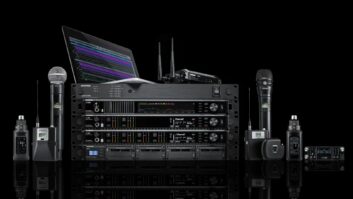
EKU’s previous production environment relied on point‑to‑point fiber runs and SDI signal paths that limited routing flexibility and required regular repatching between events. Working with Bridge Digital, the university migrated to a campus‑wide ST 2110 infrastructure that uses its existing fiber backbone along with COTS IP switches populated with Riedel MediorNet MuoN A processing SFPs. These SFPs handle gateway conversion, frame synchronization, and HD‑SDI processing, creating an adaptable foundation for routing any source to any destination on the network.
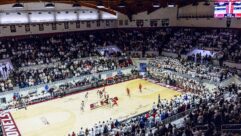
The university’s production operations center on two main hubs connected by a 100‑gig network path: Perkins and Alumni Coliseum (AC). Sports and events branch from these hubs based on location — football ties into Perkins, while basketball, baseball, and softball originate at AC, and soccer routes back to Perkins. All venues, including AC, which has expanded to an eight‑camera setup for more complex productions, feed signals over the existing fiber network into central control rooms, eliminating the need for additional fiber installations.
The Center for the Arts, previously isolated from the control rooms, is now fully connected to the campus‑wide network. The facility uses PTZ cameras, a Dante interface, and MediorNet FusioN frames to support commencements, concerts, and other large‑scale events. Productions across athletics and arts facilities now share the same infrastructure.
At each venue, Riedel FusioN frames provide local I/O, multiviewer feeds, and integration of legacy SDI equipment. Their plug‑and‑play flexibility allows EKU to keep using SDI cameras without changing how student and volunteer operators work. The system’s multicast addressing structure and diagnostic tools support easier monitoring and streamline operations across the network.
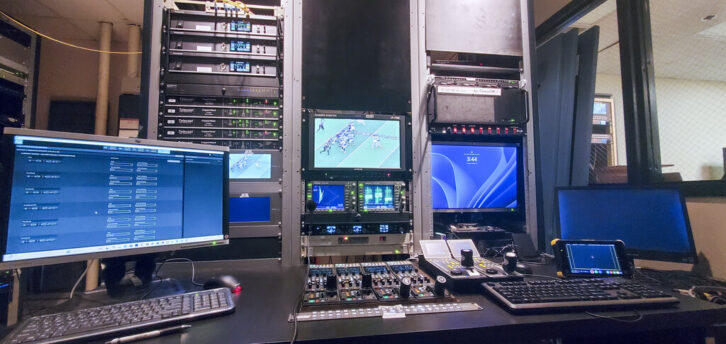 “The beauty of FusioN is that it fuses the past with the present, allowing teams to bring legacy signals into a modern IP workflow,” said Aubrey Shamel, Systems Design Engineer, Bridge Digital. “When we first walked into EKU, they had an extensive fiber backbone that wasn’t being fully utilized. By moving to an ST 2110 workflow with MediorNet FusioNs with MuoN processing at the edge, they gained the flexibility to route anything anywhere without changing the operator’s workflows — enabling the production team to shift between control rooms without remapping sources or patching cables.” Shamel added: “Not having to run new fiber and being able to bring SDI sources into the network anywhere on campus also made the transition smoother, faster, and more cost-effective.”
Communications at EKU rely on Bolero wireless intercoms with antennas strategically positioned for each venue — two antennas cover the entire football stadium, a single antenna provides full coverage at the baseball facility, and testing around the soccer complex confirmed strong performance even beyond the field perimeter.
“We use Bolero for field communications and PunQtum throughout our control rooms, and the combination has been incredibly powerful,” added Katie Adkins, Assistant Director of Broadcasting and Video at EKU.