As one of the seminal AV platforms, Sphere is finding its stride with programming, making use of its world’s largest 580,000 square foot LED exterior (Exosphere) and its dramatic interior LED canvas and immersive audio system. Here’s a look at what hit the boards there in 2025.
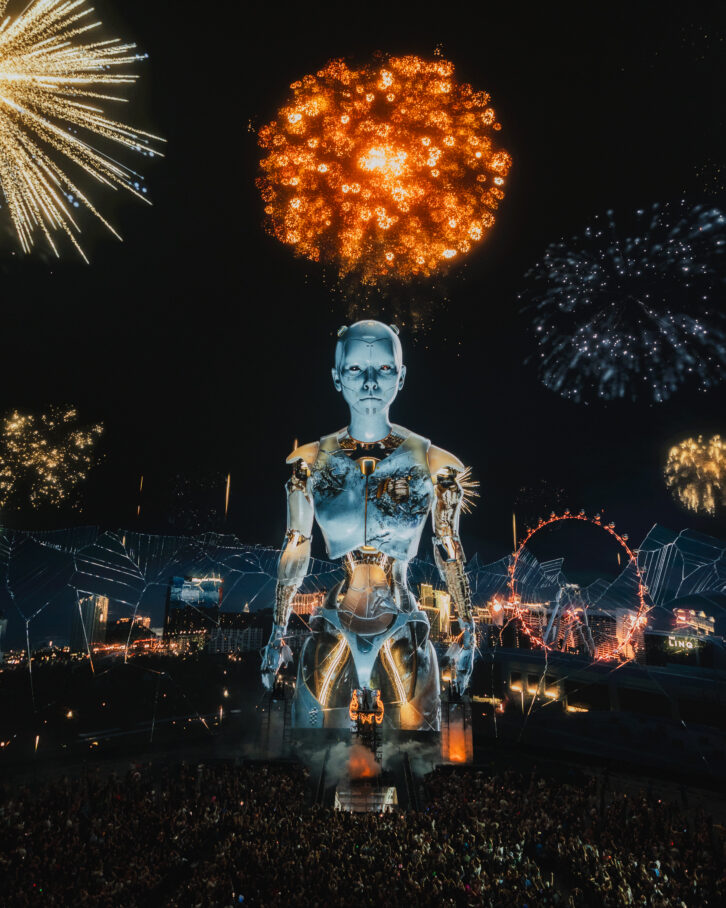
The year started with the Lexus-sponsored show on the Exosphere, celebrating cities around the world and culminating in a countdown as part of the Las Vegas fireworks show, “America’s Party 2025”, with fireworks launching from the rooftops of nine resorts across the Strip. Inside, just after midnight, Sphere content shifted to the venue’s first-ever electronica concert with Afterlife Presents Anyma ‘The End of Genesys.’ The event also featured art from self-described “psychedelic math artist” UON Visuals – the latest artist to create art exclusively for the Exosphere as part of Sphere’s XO Art program. UON Visuals is a 3D artist based in Vancouver, British Columbia, who uses math formulas and code to craft intricate animated patterns and dynamic color spectrums.
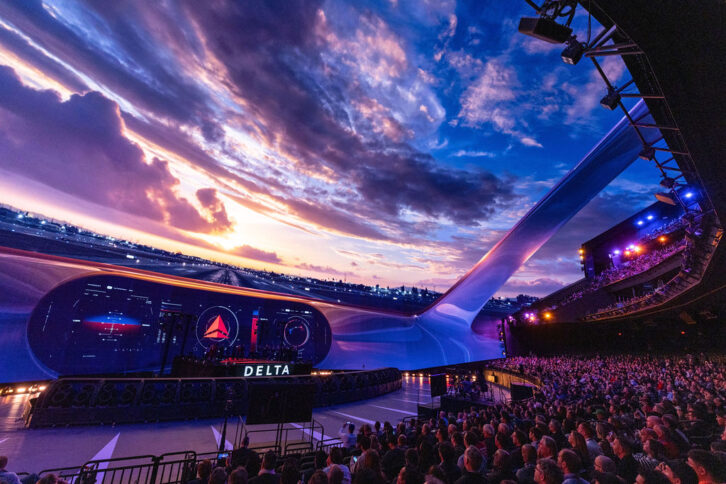
Soon after, at CES, Delta Airlines gathered 18,000 people in Sphere to celebrate the 100th anniversary of the longest-running US airline, with CEO Ed Bastian presenting the first-ever CES keynote at Sphere. Instead of just another keynote, Delta used all the immersive capabilities of Sphere, which not only included the floor-to-ceiling video and incredible audio, but also wind, aroma, and tactile in-seat effects to take viewers on an immersive virtual journey that included a massive Airbus A350-900 taxiing into Sphere, followed by a take-off, in-flight cockpit view, and landing spaced throughout the evening. The event was so successful that Lenovo has claimed Sphere for the 2026 CES keynote.
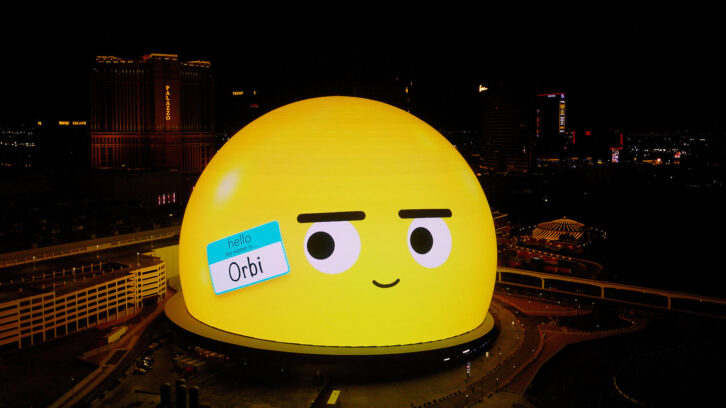
In February Sphere continued its marketing mojo as an entertainment brand–and the world’s largest digital signage platform–to formally introduce its mascot Orbi, the iconic emoji character that has appeared daily on the Exosphere since the opening in summer 2023. Coinciding with this reveal, Sphere launched its brand-new e-commerce website featuring original Sphere merchandise, including the “Orbi Collection.”
In March, Sphere leaned into its role of supporting experimental art to take advantage of its unique surfaces. Visual artist Jen Stark became the latest artist to design art for the Exosphere as part of the XO/Art Program, which features renowned artists’ work on Sphere’s immersive exterior. Titled Cosmic Cascade, the 90-second display features a psychedelic waterfall of colors and patterns oozing down Sphere’s exterior in Stark’s signature style. This cascade of pulsating imagery creates what Stark calls “psychedelic camouflage.” Also in March, and as part of the XO/Art Program, Sphere announced its Second Annual Sphere XO Student Design Challenge to allow Clark County students to design the Exosphere’s Earth Day look. The Sphere XO Student Design Challenge is an ongoing collaboration among Sphere, the Clark County School District (CCSD), and University of Nevada, Las Vegas (UNLV) that gives local students the opportunity to have their work displayed on the world’s largest LED screen. Eight student artists ranging from elementary school through college were selected via a combination of public voting and artist judging. More than 100,000 Clark County-based students were invited to create art for the Exosphere around this year’s theme of Earth Day. In addition to seeing their work displayed on the Exosphere, winning high school and UNLV students received a $10,000 educational scholarship from Sphere, while winning elementary and middle school students earned a $10,000 donation from Sphere for their school’s art program to further art education in public schools, along with tickets for their entire school to attend The Sphere Experience.
Meanwhile, the Sphere is a unique and compelling concert venue. Kenny Chesney was the first country artist to take advantage of all that power and described it this way. “You can’t truly understand until you start playing music with all the people there, feeling that energy and the way the visuals and the songs just consume people,” Chesney said of the decision to come back for second show next year, an intention he announced from the Sphere stage on the last night of his 2025 residency. “The more I watched the fans having this experience, the more ideas I had – both to reconfigure some of last year’s songs, and a few songs that seemed like they should get this immersive treatment.”
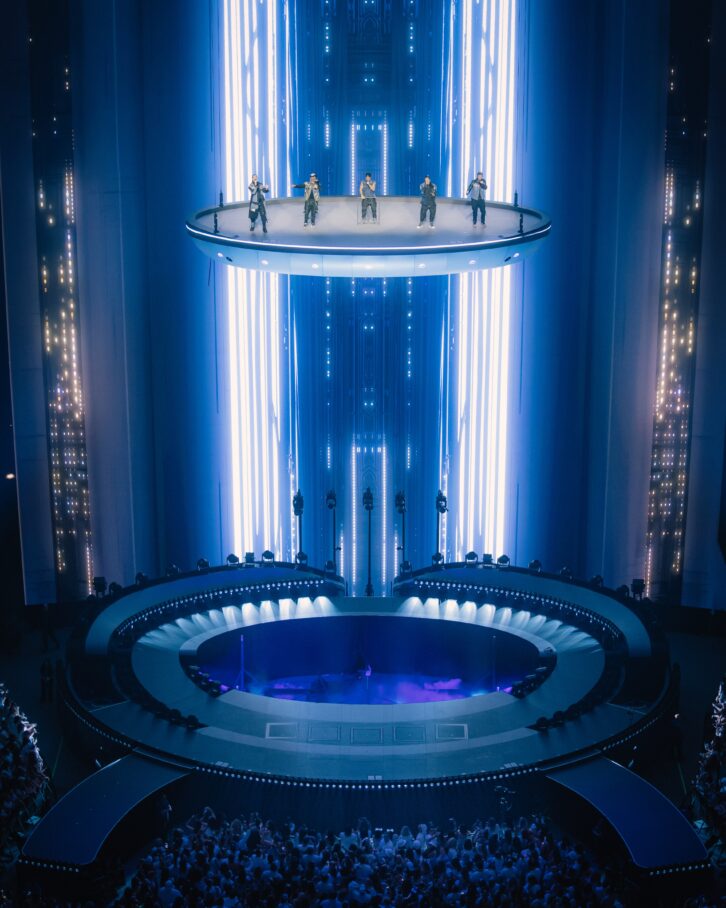
 The other marquee concerts for Sphere this year include residencies for the Backstreet Boys and the Eagles. Backstreet Boys took the summer shift to bring their seminal Millenium album to new life, and Eagles were back to headline the fall. In between August saw the residency of USBased Insomniac and Belgium’s Tomorrowland, two of the world’s most iconic music festival creators, who joined forces for UNITY, a fluent and powerful experiences that took audiences on a mindbending ride. With decades of combined history in immersive festival experiences, the collaboration was ideal for the kind of immersive music and storytelling Sphere supports, for those who know how to use it.
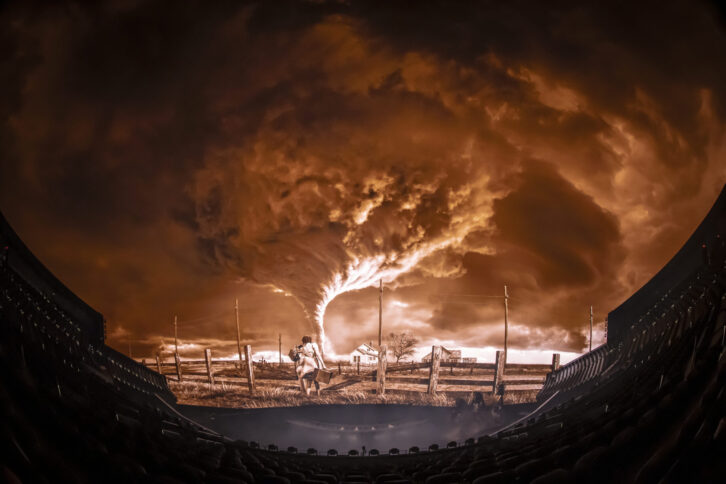
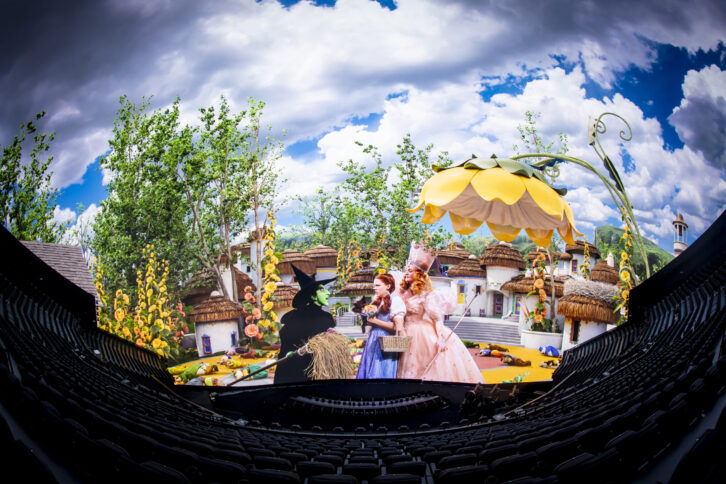
The comprehensive vision for Sphere Entertainment also includes creating original works via Sphere Studios. This year’s original project The Wizard of Oz at Sphere was a resounding success with more than 500,000 tickets sold and over $65m in ticket sales. The original 1939 film was presented as a fully immersive experience for Sphere. In collaboration with Warner Bros. Discovery, Google, and Magnopus, Sphere maintained the integrity of the original while pushing the boundaries of Sphere’s experiential medium.
The creative team behind The Wizard of Oz at Sphere includes Academy Award and Emmy-nominated producer Jane Rosenthal (The Irishman); Academy Award-winning visual effects specialist Ben Grossmann (Hugo); Academy Award-winning editor Jennifer Lame (Oppenheimer); and Creative Director Zack Winokur (Little Island).
The original film, shot for a 4:3 movie screen in the 1930s, filled Sphere’s 160,000 sq. ft. interior display plane, which wraps up, over, and around the audience to create a fully immersive visual environment with 22-foot-tall ruby slippers on view on the Exosphere to tease the general public as well.
 Ben Grossmann, CEO of Magnopus said, “Our guiding principle in The Wizard of Oz at Sphere is not just to leave the audience with a sense of wonder and delight from meeting the characters in a new way, but to leave them with the feeling that they were there with them. This project brings together some of the greatest film historians, artists, and technologists to do what’s never been possible before, putting the audience inside the world of the film and giving them a whole new level of experience and adventure.”
To create this experience, Sphere Studios, the immersive content studio dedicated to developing experiences for Sphere, built a team of over a thousand artists, technologists, and researchers to leverage Sphere’s technologies. Using the film and key pieces of source material, including schematics, set plans, and scores, the approximately 75-minute film experience also took advantage of newly discovered archival material.
The Wizard of Oz at Sphere utilizes the venue’s haptic seats, environmental effects, and custom scents to make audiences feel a part of the movie. The film’s original songs were also remastered and their orchestrations re-recorded to take on new clarity via Sphere Immersive Sound’s 167,000 speakers.
“There’s Dorothy and ‘Over the Rainbow’ as you heard them before, and there will be Dorothy and ‘Over the Rainbow’ as you hear them now, with the film’s classic music taking on new clarity and immersion through Sphere Immersive Sound,” said Carolyn Blackwood, Head of Sphere Studios.
To take advantage of Sphere Immersive Sound’s 167,000 programmable speakers, and ability to direct sound anywhere in the venue, the original film’s mono score was re-recorded to take on new clarity via Sphere Immersive Sound, while preserving the casts’ vocal performances. The mono audio had to first be separated into individual stems of vocals, dialogue, and sound effects. This process, a collaboration between Sphere Studios and Warner Bros. Post Production Creative Services, used advanced audio technologies to create the individual components without distortion or artifacts. Inside Sphere, the stems are being layered together to create the mix.
Respect for the original music extended to re-recording the score on the same scoring stage as the 1930s original – retaining the same acoustic environment. To further maintain the integrity of the original score, the re-recorded score features more than 80 musicians playing in the 1930s style of film music, including techniques such as pizzicato and vibrato that were standard for the era, but are less common in modern scores. Additionally, an ocarina, a small wind instrument used during the original recording session of “If I Only Had a Brain,” was also used for The Wizard of Oz at Sphere recording, having been passed down through generations of musicians.
While re-recording the score, each section of the orchestra was also recorded individually with state-of-the-art miking. Coupled with Sphere Immersive Sound’s directional capabilities and the vocal and sound effect stems, it seems as though sound travels around the venue. For example, as the Tin Man tilts back and forth during his number, the isolated sound of the strings oscillates to emphasize his movement in visual and sonic unison.
To enhance the immersion in The Wizard of Oz at Sphere, Sphere’s infrasound and haptic seat technology is being used for the first time to not only create vibrations, but also emit tones that emphasize moments in the film experience. For example, when the characters enter the haunted forest, an eerie tone will emanate from the seats, bringing the audience into the foursome’s perspective and imposing the same ominous feeling.
“This is the first time sound technology has been used in this way in any venue,” said Paul Freeman, Vice President and Principal Audio Artist, Sphere Studios.
The vibrations, infrasound, and Sphere Immersive Sound will come together for maximum impact during key moments of The Wizard of Oz at Sphere. When the main characters visit the Wizard in his throne room, his voice will boom throughout the venue, complemented by tremors and low-frequency sounds from the seats.
The sound creative team for The Wizard of Oz at Sphere includes Grammy Award-nominated music producer/sound designer Paul Freeman (Spies); Grammy Award-winning music supervisor Julianne Jordan (A Star Is Born); Academy Award-nominated composer David Newman (Anastasia); and Academy Award-winning sound engineer Shawn Murphy (Jurassic Park). And from Warner Bros. Post Production Creative Services: sound engineer Tony Pilkington (Sinners); Academy Award-winning supervising sound editor/sound designer Richard King (Dune: Part Two); and Cinema Audio Society-nominated re-recording mixer Tim LeBlanc (Superman).