Tampa International Airport (TPA) just rolled out a sophisticated new passenger wayfinding and digital signage system, featuring mobile integration, AI assistance capabilities, and personalized turn-by-turn directions accessible through a boarding pass scan. The system, now deployed across the main terminal and serving thousands of passengers daily, did not begin as a public-facing project. It started two years earlier with a much narrower scope: helping hybrid employees find a desk.
The Hillsborough County Aviation Authority operates both TPA and the adjacent headquarters building, SkyCenter One. When the latter needed a hot desk/space reservation and wayfinding solution, the team selected a visual experience platform that could do all they needed and more: 22Miles. The SkyCenter One deployment became a proving ground for the platform, allowing the IT team to evaluate the platform, integrations, and governance model for later expansion into a high-profile public environment. For enterprise IT teams and facility managers, this sequence offers a useful case study in de-risking a large rollout by starting small.
The Starting Point: A Grounded Pilot Program
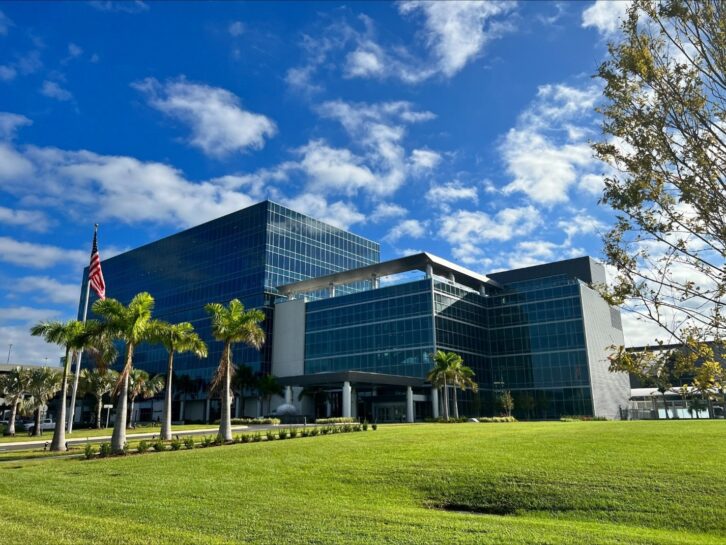
The SkyCenter One deployment phase was focused entirely on internal priorities. The goal of the project was to help employees navigate a new activity-based workplace with 280 hot desks and meeting rooms while also streamlining daily operations through real-time occupancy monitoring and usage metrics. Working with systems integrator AVI-SPL, the Authority deployed 22Miles as the building’s content management, wayfinding, and custom mobile app solution.
The 22Miles platform integrated with Azure single sign-on; Microsoft 365 and Embrava sensors for real-time space reservation; and ServiceNow for facility request ticketing. Employees accessed the full experience via a custom mobile app including real-time space reservation and turn-by-turn 3D wayfinding; visitors could access a browser-based wayfinding experience through a QR code scan.
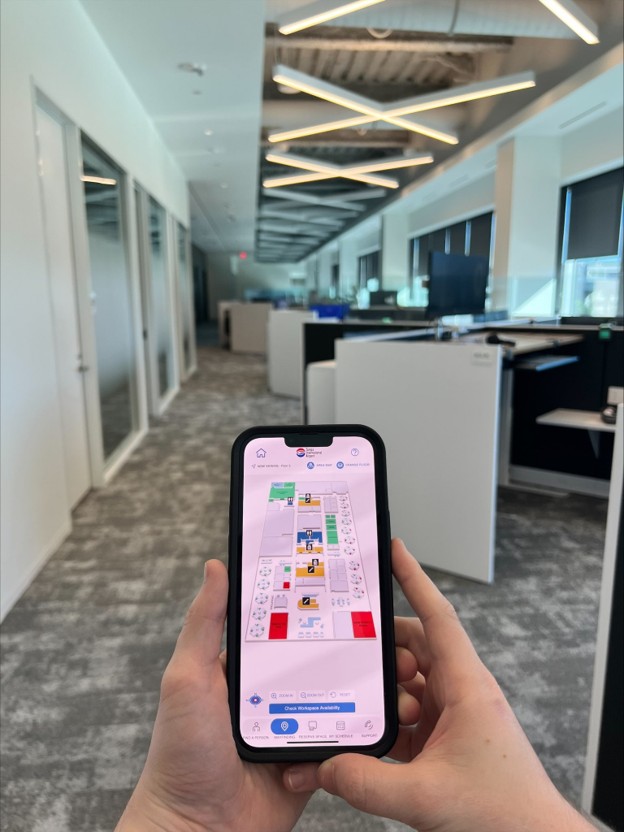
The 22Miles platform has capabilities that extend far beyond mobile wayfinding and room reservation, including digital signage, multi-touch, videowall, and immersive experiences. However, this contained scope—a single building with a defined audience—allowed the Authority to address its near-term needs while validating the platform service, support, and integrations; confirm data accuracy; and build content and governance workflows. When they were ready to expand to a public-facing application, the platform was already a trusted part of their stack.
That value is core to the “project as pilot” mindset: by intentionally adopting a solution with the headroom to address future needs, teams can build an operational track record that informs their next decision.
Public Debut: Scaling to the Terminal
When the time came to modernize the passenger-facing visual experience across TPA’s main terminal, the Hillsborough County Aviation Authority again turned to AVI-SPL. The terminal’s existing information kiosks were dated, with limited mapping capabilities and no mobile integration. Building on the same 22Miles visual experience platform, AVI-SPL developed a flexible, accessible solution designed to exceed modern traveler expectations.
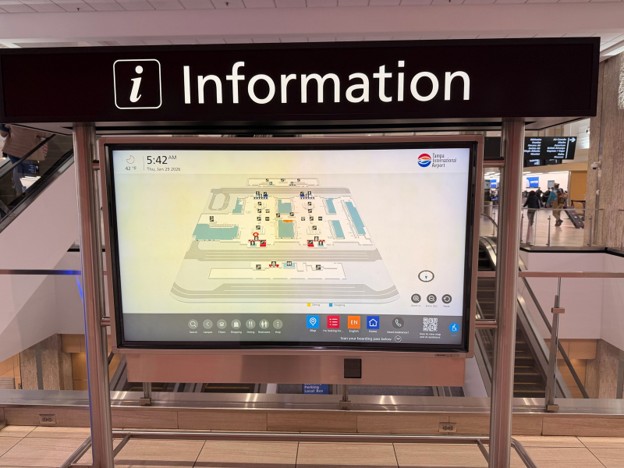
The terminal deployment includes 20 interactive touchscreen kiosks, with multilingual support and accessible layout options. Each kiosk includes an RFID boarding pass scanner for gate lookup and routing; 22Miles integrates with TPA’s Flight Information Display System for live gate and delay data feeds. Users can transfer turn-by-turn directions to a personal device by scanning a QR code. The deployment also includes one of the nation’s first traveler-facing AI assistants in an airport setting, allowing customers to get context-aware answers to natural language questions about everything from dining options open near their gate to the process for checking in an unaccompanied minor for a flight.
The scale of the terminal deployment is far larger than SkyCenter One in terms of both hardware and user base, but the foundational features are the same: 3D wayfinding, mobile integration, real-time data integration, and detailed system analytics. The operational track record at SkyCenter One gave the team confidence to not only expand the scale of the visual experience platform, but to take on new features as part of the expansion.
Cultivating Enterprise-Scale Systems
SkyCenter One and the TPA terminal were separate projects, with different goals, audiences, and levels of complexity. In terms of enterprise IT management, however, they could also be viewed as two different phases of visual experience infrastructure rollout. In expanding the 22Miles deployment to the terminal, the Hillsborough County Aviation Authority team has successfully proven that they can scale to new applications and locations on this platform.
A contained, low-risk project is an excellent opportunity to evaluate how a promising solution fits into enterprise operations. Over time, as proven platforms are rolled out across the enterprise, the entire tech stack becomes easier to manage. Projects that would otherwise be one-offs become a valuable proving ground for vetting infrastructure, normalizing operations, and building enterprise-wide technology standards.
The approach Hillsborough County Aviation Authority took with AVI-SPL and 22Miles is a useful model:
- Start with a defined, internal use case.
- Validate the infrastructure under real-world operating conditions.
- Extend the foundation to an application with larger scope and higher stakes.
This approach allowed TPA to offer passengers a visual experience built on a tested, trusted platform that was already deeply integrated with their operations. For enterprise technology managers, a phased deployment approach empowers teams to take on bold projects with technology they already believe in.