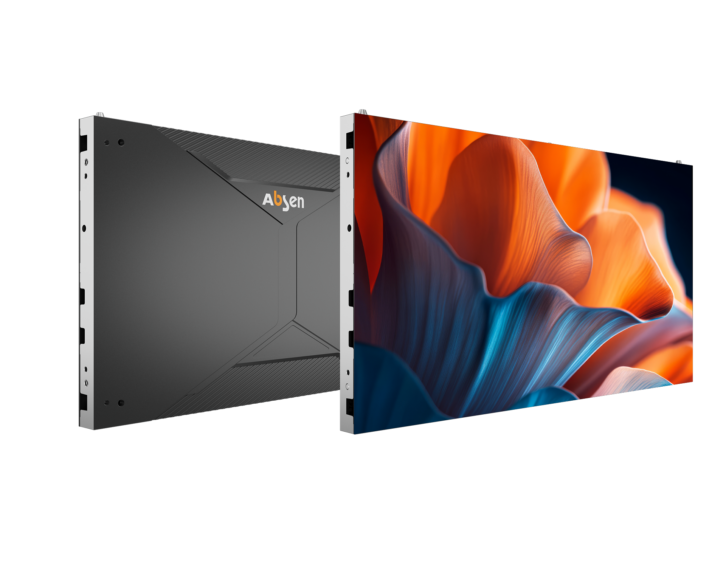
 At ISE 2026, the Absen CL V3 Series debuted as the company’s latest flagship indoor LED. The CL V3 Series supports up to 97% DCI-P3 wide color gamut, peak brightness of up to 1600 nits, and a 30,000:1 contrast ratio. Built on flip-chip COB technology and Absen’s 9-layer HTB ultrablack packaging process, the display is designed for immersive viewing in both bright and controlled lighting conditions. Adaptive color matching ensures consistent visuals across content sources and multi-screen installations. Designed for extended daily operation, it features a 7680Hz refresh rate; its 22-bit grayscale and PWM+PAM hybrid drive technology ensure smooth color transitions without banding or visual artifacts, and a TÜV Low Blue Light certification supports visual comfort during prolonged use. A slim ultra-slim cabinet design and lightweight panels support wall-mounted, hanging, and stacking installations.
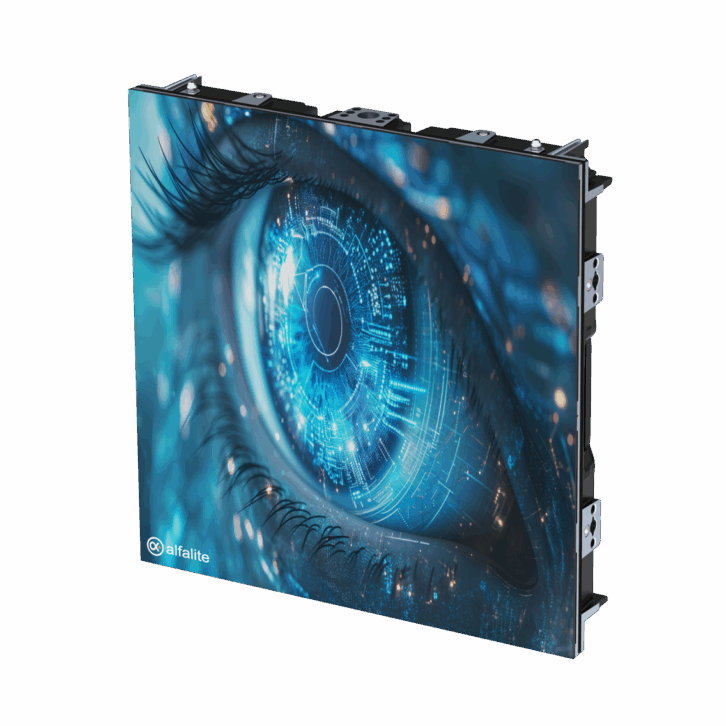 The ALFALITE Matix AlfaCOB/AlfaMIP (Chip On Board) LED panels have a low reflection/ low glare surface coating that protects against impacts, liquids, and chemical agents and is anti-blue light. The static electricity protection parameters are ESD> 10kV, and both models have enhanced thermal dissipation. With just <0.05mm between modules, light distortion at the joints is improved, alongside the screens’ better chromatic and light uniformity, and good blacks. The series combines higher brightness with lower consumption. Adhesion to substrate is improved, and it’s designed for the shortest repair time on the market.
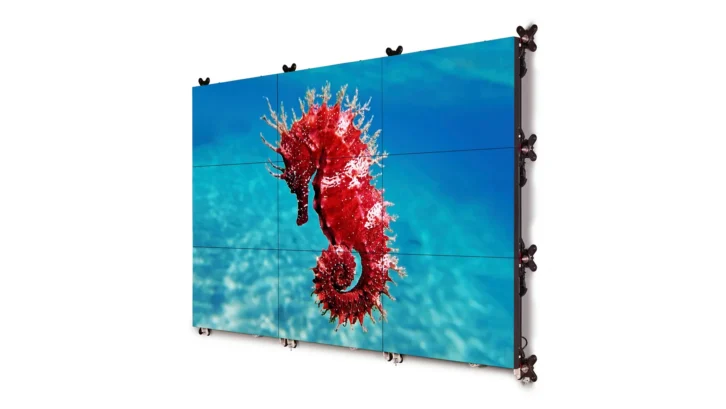 The Barco UniSee 500+ is the latest generation of its UniSee LCD video wall platform, combining improved image performance with a 25% reduction in power consumption. UniSee 500+ builds on Barco’s established UniSee architecture, including its NoGap bezel technology and precision mounting system. UniSee 500+ introduces smart local dimming in the 500-nit LCD segment. Enhanced inter-panel communication and advanced color, brightness, and contrast calibration are designed in. The platform is EMC Class B certified for reduced electromagnetic emissions; heat radiation has also been lowered, and it is TAA-compliant.
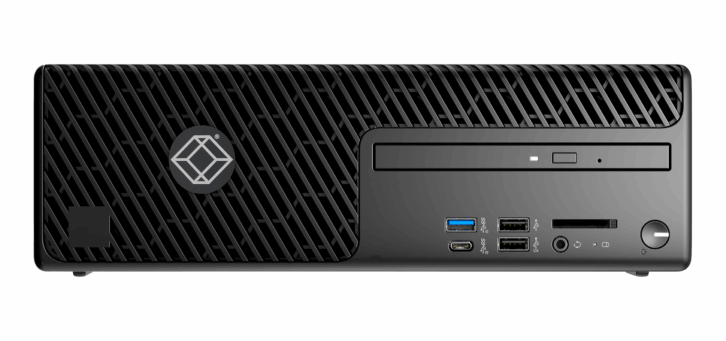 The Black Box Emerald DESKVUE PE receiver allows simultaneous access and multi-viewing of up to 16 different physical or virtual systems. With any DESKVUE model, all systems are displayed as individual windows on up to four 4K monitors, including one ultrawide curved 5K monitor. Users can arrange system “tiles” or “windows” in any way to focus their main tasks in the center. Switching of the systems happens automatically in the background as users perform their tasks without them even noticing the system change, removing any need for manual switching commands. Emerald AV WALL, a software feature inside Emerald DESKVUE, makes it easy to display a single source from an Emerald system on a video wall for viewing by a larger group. The solution directly supports a 2×2 video wall, and through additional units, users can expand to up to 4×4 supported monitors.
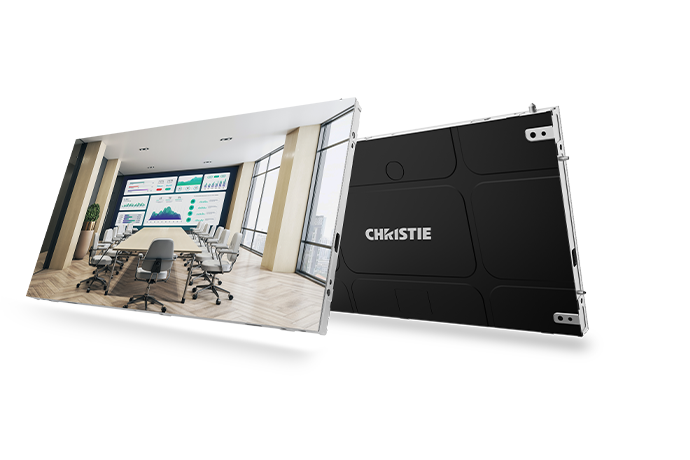 The Christie Core Series III is available in five pixel pitches from 0.9mm to 2.5mm. It’s 40% more energy efficient and 30% lighter than its predecessor, Core Series II. Christie positions it for impactful display in venues including retail, hospitality, and public spaces.
 The Datapath Aetria Touch panel allows quick, easy management of content displayed on any video wall within the Aetria environment. The 10.1” touch panel is designed to sit on an operator’s desk or be affixed to a wall and connects directly to the Aetria control network via an Ethernet connection with optional POE. Secured using device encryption and Aetria User Rights Management, users can select the video wall they’d like to manage and open and close layout files as the situation demands. The additional, optional Aetria Touch Pro interface allows users to open sources as individual windows and use touch gestures to place them on the wall, sizing and positioning as needed. For whole-wall collaboration, windows can be quickly maximized across the video wall when an issue occurs and restored to their original position once the situation is resolved.
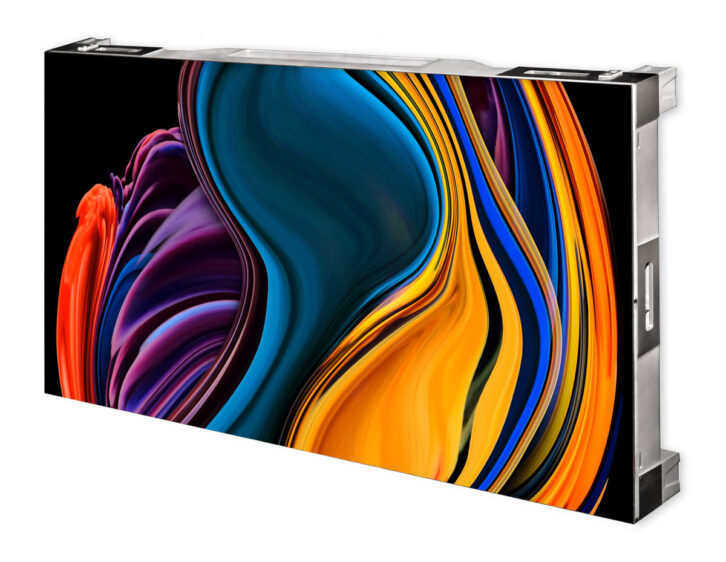 The Digital Projection Radiance LED EV Series is designed for image clarity and detail in environments dictated by short viewing distances. Including Micro LED technology in both pixel pitch 0.9mm and 1.2mm, the new EV Series is well-suited for critical viewing in commercial applications, such as small and medium-size boardrooms and command and control facilities. Other features include peak brightness up to 1,200 nits (excellent for HDR10 content), contrast up to 20,000:1, 100 percent (100%) NTSC and DCI-P3 color gamut, and a wider viewing angle (170 degrees horizontal/170 degrees vertical). The 0.9 mm MicroLED solution is more efficient to manufacture than SMD technology, bringing the price down for this category. Power consumption is also significantly less.
 Last fall, the Extron MGP 641 xi 5K multi-window processor began shipping. This rack mountable scaling processor is designed for presenting up to four 5K sources on a single screen, including 5K and ultra-wide displays. Supported video signals can be up to 5120×2880 with 4:4:4 color sampling and Extron’s Vector 4K scaling engine. In addition to four HDMI inputs that support data rates up to 18 Gbps, the HDCP 2.3-compliant processors include an HDMI background input for presenting live, non-scaled content behind the source windows at resolutions up to 5K. The MGP 641 xi 5K SDI model supports 12G-SDI sources, along with HDMI. An HDMI output accommodates a local display, while the DTP3 output that supports 4K/60 and 5K resolutions drives a remote display located up to 330 feet (100 meters) away with identical content. Customizable layouts, video and logo keying, window transition effects, and output rotation are supported. Two-channel embedded audio can be extracted or passed to the video output. Annotation is via an optional LinkLicense.
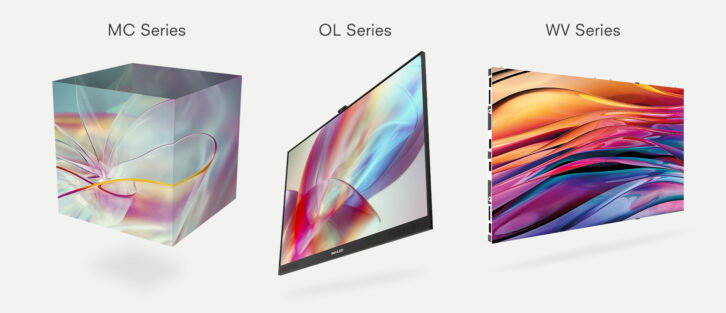 The IP65-rated INFiLED MC Series is a rental solution with options such as flat screens, curves, and multi-face cubes, all designed for durability in transit. Pixel-pitch options range from 2.6mm to 4.8mm in both 500mm × 500m and 500mm × 1,000 mm sizes. For corporate and retail environments, the INFiLED OL Series LED touchscreen is designed for presentations and information exchange and consists of a preassembled set of 16-bit color LED module columns, speakers, and a 4K camera with 100°wide-angle lens. Available in standard sizes of 108” and 136” or custom dimensions, all with multiple input ports (HDMI, RJ45, USB 3.0, and 3.5mm audio). The INFiLED WV Series is a silent 24/7 fine-pitch modular LED video wall designed for control room installations with pixel pitch ranging from 0.9mm to 2.5mm. INFiLED also brought some new technologies to ISE, including ColdLED touch surface; CBSF (Color & Brightness Shift Free) technology for xR/VR; and SolidSkin proprietary glue-onboard (GOB) transparent protective layer.
 In February, the Jupiter Catalyst Flare debuted (shipping Q3) as the company’s next-generation video wall processor designed for small to medium-sized visualization projects. Catalyst Flare succeeds the widely deployed Catalyst V for demanding AV and control room environments. Designed from the ground up, Catalyst Flare combines a compact, quiet 4RU form factor with a selection of 5th Gen IntelXeon processors, a new graphics platform, and native Windows 11 IoT Enterprise LTSC support. Catalyst Flare supports up to 16 4K outputs and 16 4K inputs, with the ability to decode 120+ concurrent streams. The processor is certified for Pana 21:9 displays at native 5K resolution.
 Internet Protocol Media Experience (IPMX) became part of the Panasonic SDM display ecosystem with the Matrox ConvertIP SDM cards. The cards are compatible with the Intel SDM specification slots found on Panasonic’s state-of-the-art range of LED displays, 4K projectors, and conventional displays. The IPMX open standard supports uncompressed streaming at 25Gbps and also supports both 10Gbps and 1Gbps bandwidths for sharing compressed media in Pro AV environments. The Matrox ConvertIP SDM card also increases redundancy and minimizes disruption in the event of signal failure. This is achieved through the IPMX daisy-chain method; multiple Panasonic devices are connected to each other in a linear fashion, with the output of one device directly linked to the input of the next, in a loop, for single cable redundancy.
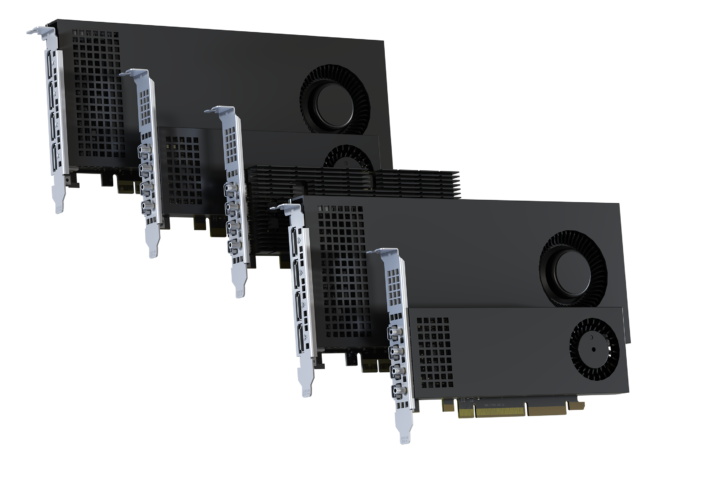 The Matrox LUMA Pro Series graphics cards with Intel Arc GPUs are designed to power digital signage and video wall systems in both the mainstream and pro AV graphics markets. The range satisfies significant demand for driving multiple screens and ever-increasing pixel counts, with a balance between size, reliability, and performance for different applications. The LUMA 310 and 380 cards are single-slot PCIec4.0 x8 cards with four native Mini DisplayPort 2.0 connectors. For IP-based digital signage and video walls, the graphics cards can drive two 8K displays—or two 5Kp120 displays—or up to four synchronized high-resolution displays or projectors from one board. Coming soon, the LUMA 380 Octal will drive four 8K displays—or four 5Kp120 displays— or up to eight synchronized 5K displays or projectors.
 At ISE 2026, MAXHUB debuted its all-new LED All-in-One display, the MAXHUB Raptor Series V3 Lite. This Lite series claims a breakthrough in ultra-slim design. As an All-in-One display, it retains MAXHUB’s core strengths, supporting stable wireless screen sharing and convenient BYOD functionality. The product comes with a dedicated management backend, supporting remote device management.
 The Planar DirectLight Slim Series features an ultrathin, narrowwidth form factor. The fine pixel pitch MicroLED video wall display accommodates curved and spaceconstrained applications that benefit from its unique form factor. The Planar DirectLight Slim Series offers an installation depth of less than two inches and is ideal for tightly curved video walls with the solution’s reduced width delivering minimal color shift compared to other LED displays. The launch also introduces pixel-level monitoring, offering more detailed insight into display health and performance by allowing users to identify when service or repair is needed. The latest improvements to the Planar DirectLight family also add pixel-level monitoring and MicroLED technology to the Planar DirectLight Pro Series, introducing improved brightness, power consumption, and overall video performance.
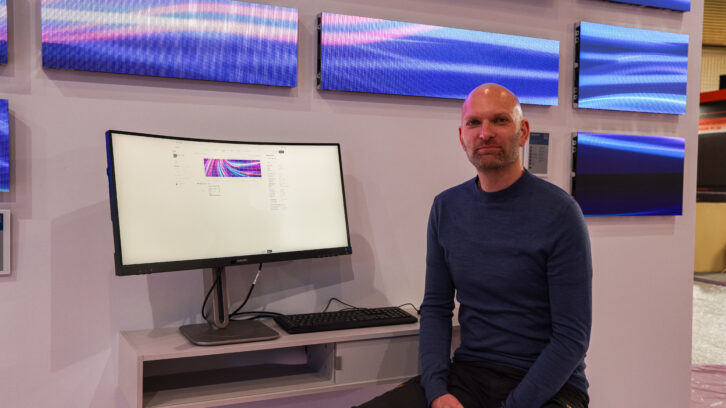 At ISE 2026, the Philips LED Configurator debuted. Free to use and available exclusively to PPDS partners and customers worldwide, the intuitive Philips LED Configurator allows customers to create and accurately visualize their designs, down to the finest specifications and details. It allows partners and customers to select from PPDS’ full suite of indoor and outdoor Philips dvLED panels, factoring in size, pixel pitch, brightness, and refresh rates, among other variables. The tool was built in collaboration with producers of brackets, mounts, control boxes, data cables, light sensors, finishing kits, and more.
 In November, Samsung The Wall MPF Series was announced, marking an important expansion to its Chip on Board (CoB) lineup. It claims brightness at 1,000nits and over 1.6 times super black depth. Black Seal Technology+ gives a contrast ratio 43,000:1. It carries Pantone and TUV Rheinland Eye Comfort certifications, validating both the accurate expression of 2,140 colors, including 110 newly added skin tone shades, and the reduction of harmful blue lights. Configured with the NQM AI Gen2 processor, it automatically analyzes and enhances frames of all sizes. AI upscaling transforms lower resolution content to up to 8K resolution. It has a consolidated cabinet and one-frame structure, reducing the depth by 35 percent and weight by 18 percent.

The new Sony Crystal LED S Series, encompasses mid-market options for high visibility, bezel-free dvLED even in bright environments. The two thin new models, the ZRDS12G and ZRD-S15G, feature 800 cd/ m2 of maximum brightness and a 1.25 and 1.56 mm pixel pitch, respectively. With 800 cd/m2 brightness, the Crystal LED S Series also offers the same Anti-Reflection Surface Technology in Sony’s BH Series of Crystal LED displays. The S Series’ thin design incorporates a slim cabinet with a thickness of approximately 45mm/1.8 inches, representing a 35% reduction in depth; the models are ADA-compliant when combined with appropriate wall mount frames. The S Series integrates with the NovaStar’s flagship high-end COEX series, MX30 and MX40 Pro controllers for extending control reach up to 100m. Installation-friendly features also include precalibrated modules and surface protection.
 The Sharp LD-AF Series of direct view LED displays provide all-in-one functionality with integrated speakers and remote control, and an integrated Android 13 media player. Designed with an emphasis on simplicity, the displays provide a unified user experience across Sharp’s line of SoC displays. The range is available in sizes of 138” and 165” diagonal and feature Full HD 1920×1080 resolution. The display is powered by a single cable; USB-C integration allows for DP-Alt mode, as well as upstream capabilities for controlling peripherals through the separate USB-A downstream connection. Optional software includes Sharp’s NaViSet Administrator. The range is compatible with Crestron Connected software and Crestron XiO Cloud Service.
 The RGB Spectrum Zio W4008 Series compact video wall processors are designed to drive up to 8x 4k60 or 2x 8k60 displays, ideal for mission-critical environments. The Zio W4008 series offers all the functionality of the Zio W4000 series, packaged in a more compact 1RU chassis. The unit supports a mix of local baseband, IP video, and web-based inputs, ensuring versatile and comprehensive AV content management. A powerful drag-and-drop Zio GUI allows for quick and easy configuration; live thumbnail previews of baseband and Zio IP sources, along with user-defined presets for layouts and routing, simplify user experience. The series can be used as a standalone unit or as part of a larger Zio AVover-IP system. The Zio product family includes a comprehensive range of encoders, decoders, multiviewers, wall processors, and a mobile app that supports phones and tablets. Four models of the Zio W4008 series are offered, each with different I/O configurations to meet diverse operational needs. A standout feature of the Zio W4008 series is its seamless integration with RGB Spectrum’s XtendPoint KVMoverIP system; the W4008-C model connects the video wall with the facility’s operator console.
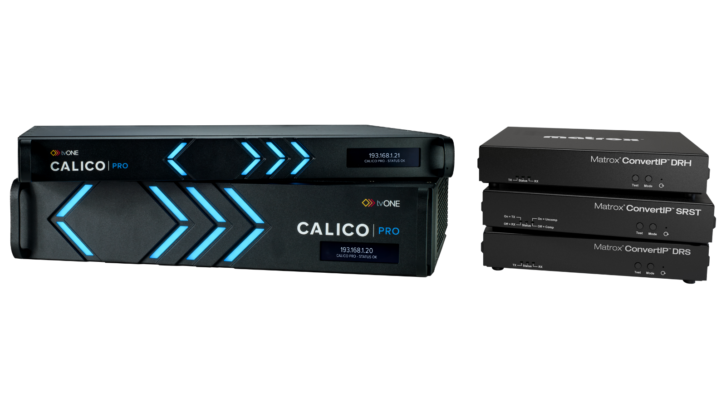 A strategic partnership between tvONE and Matrox Video pairs tvONE CALICO PRO video processing with the Matrox ConvertIP Series of encoder-decoders and converters. The integration provides users with a means to connect SMPTE-ST-2110 and IPMX infrastructures while supporting compressed and uncompressed workflows across broadcast, live event, control room, and experiential applications. With CALICO PRO’s 66-million-pixel engine and Matrox Video’s Field-Programmable Gate Array (FPGA) core, the partnership is designed to provide flexibility, fidelity, and future-proof performance.
 At ISE 2026, the VuWall PAK ONE debuted. This compact, single-output, single-channel 4K decoder is designed for modern control rooms, and can deliver visuals to welcome displays, remote operator workstations, and secondary monitoring points beyond the core control room. As the newest addition to VuWall’s PAK family, PAK ONE supports a wide range of decoding formats, including H.264, H.265, VNC, Application Server G2 sources, and proprietary streams from the VuStream 350. PAK ONE integrates natively with VuWall’s unified ecosystem, enabling operators to manage content distribution alongside TRx video wall management software, Application Server G2, and other PAK family devices.