Human Longevity Inc. operates several medical clinics across the country, each dedicated to delivering precision wellness through personalized care. At the company’s South San Francisco location, the company wanted an AV infrastructure that would complement the clinic’s forward-leaning medical technology and reflect its commitment to individualized treatment, staff efficiency, and patient privacy.
The client wanted an intelligent system to support video conferencing, patient consultation, medical imaging, and digital content delivery within a unified control environment. AV Structural, a Concord, California-based integrator designed, programmed, and installed a complete AV solution for the entire facility.
The timeline faced immediate constraints; AV Structural was engaged after construction was already underway. With framing, drywall, and electrical work already progressing, access to key rooms was delayed and often fragmented. This required the AV team to sequence installation around other trades, often working in off-hours or shifting focus room by room based on availability. Product procurement had to be executed in parallel with system design and coordination, demanding accurate development of the bill of materials and fast internal approvals.
In the MRI suite, an unforeseen conflict required a full relocation of AV conduit and terminations to accommodate DMX-controlled lighting systems. The design team responded by rerouting feeds and updating signal pathways without delaying construction. Amid these changes, AV Structural maintained strict standards for physical infrastructure. All cable pulls were labeled, terminated to 568B standards, and tested in advance of rack placement. Audio zones were mapped using a uniform 70V topology to simplify distribution, reduce amplifier count, and support long-term scalability.
The AV design centers around Extron DTP2 CrossPoint Series Scaling Presentation Matrix Switchers, which provide switching, signal scaling, audio DSP, and integrated control in a compact form factor. Two primary AV equipment racks serve the full facility, allowing central routing of HDMI sources to displays and speakers in nearly every room. This includes the reception area, lounge zones, private consultation rooms, imaging suites, clinical offices, and the executive boardroom. Clinical rooms, imaging suites, executive offices, and shared zones all share the same control logic and user interface, reducing training time and minimizing support calls.
Consultation and diagnostic rooms benefit from discreet AV infrastructure, including camera and microphone systems that support telemedicine and clinical recording. Automated behaviors, triggered by occupancy sensors and control processor logic, adjust lighting, display power, and audio volume based on room use. This makes the AV system almost invisible to staff while still maintaining full functionality.
The executive boardroom features full-room conferencing with source selection, mic management, and video control accessible through a single tabletop touchpanel. A local audio zone and dedicated DTP endpoints support clean audio routing and content switching, allowing the room to pivot between clinical leadership meetings, investor presentations, and remote collaboration sessions.
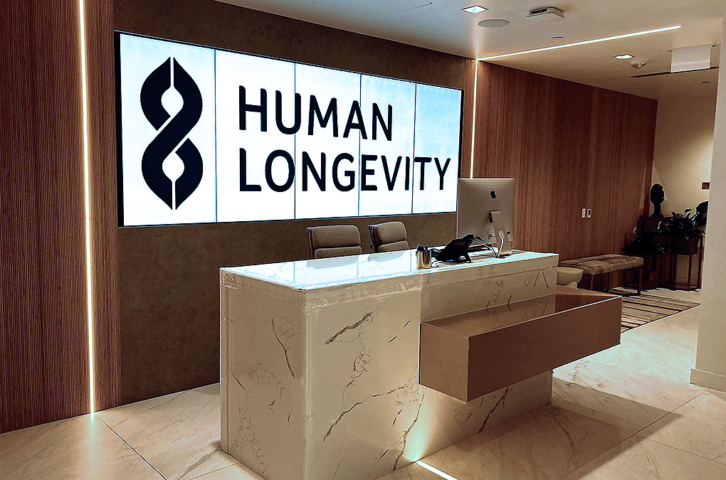
Videowall installations in the reception area and along one of the corridors use portrait and landscape displays fed directly by the DTP2 CrossPoint switchers. These displays are programmed to play curated content ranging from educational messaging to environmental visuals. It helps reinforce the clinic’s brand while creating a calm, tech-forward atmosphere. Some content requires scaling. This is handled by the switchers, while tiling logic is performed at the display level, which reduces processing load and rack requirements.
Under the hood, DTP HDMI 4K transmitters and receivers, including both rack mount and wallplate versions, support local signal extension and input connectivity. This hardware standardization make it possible to maintain consistent install practices while accommodating the architectural constraints of each room. DTP wallplates provide in-wall HDMI access at the point of use, feeding signals directly back to the CrossPoint switchers via HDBaseT over shielded CAT cable. These links also transport RS-232 and IR control signals, reducing cable runs.
System control is delivered through Extron TLP Pro 1035T TouchLink Pro touchpanels. Touchpanels are deployed in the executive boardroom and conference spaces. In the clinical areas, the touchpanels are paired with OCS 100C occupancy sensors to automate room states and limit manual interaction, which enables the staff to focus on patient care. Outside each consultation and imaging room, Extron TLS 1025M scheduling panels display real-time availability and status.
Audio processing is handled by an Extron DMP 64 Plus digital matrix processor, which manages microphone inputs and program audio for a variety of zones. Output signals are amplified using XPA U 1004 and MPA 601 amplifiers, selected for their compact footprint and Class D performance. Sound is delivered throughout the building via SF 3CT LP SoundField ceiling speakers.
Throughout the building, sound masking and audio reinforcement maintain acoustic comfort and speech privacy, especially in overlapping zones such as corridors and consultation suites. Clinic staff have responded positively to the system’s consistent interface design and responsive performance, because it enables seamless transitions between rooms with different AV profiles.