Signals in a wire either work or they don’t, but once they have entered the acoustic world, things get much more subjective. Custom-tailoring a sound system to the space of its venue demands that the signals in wires and waves are matched for mutual support. For line arrays this calls for critical output vectoring and flexibility. While manufacturers have crafted their own distinct solutions, this theme can be seen in all the models in this survey.
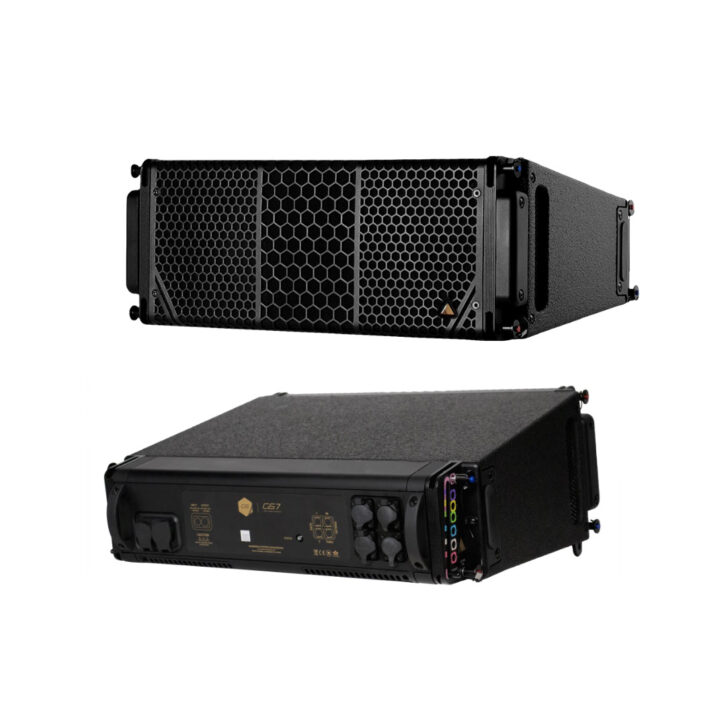 The Adamson Systems Engineering CS7 has analog input/output, but it also operates through a proprietary network platform to daisy-chain networked audio between multiple sources. Added to this is the feature of onboard DSP and amplification. Behind the scenes, Adamson’s proprietary AI software controls it all. The marine-grade birch plywood cabinet encloses two 7in. Kevlar neodymium transducers and a 3in. compression driver. The housing is fitted with in/out XLRs, etherCON terminals, and a powerCON TRUE1 connection. The transducers produce a dispersion pattern of 100 degrees horizontal by 12.5 degrees vertical. The +/-3dB frequency range is 80Hz-18kHz.
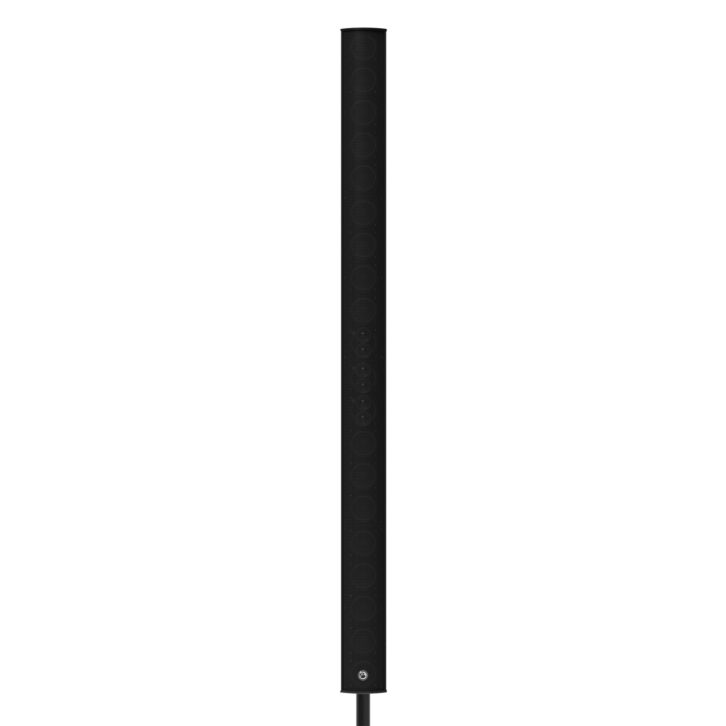 In some sound environments, particularly traditional churches with stone walls and columns, large hanging arrays do not always work acoustically or aesthetically. The AtlasIED ALA20TAW can produce big sound from seemingly nowhere using its twenty 3in. full-range drivers to deliver very clear speech. Its 45-degree vertical and 135-degree horizontal dispersion adds directivity, allowing it to keep reflections under control in very reverberant spaces. The aluminum housing is light enough to hang in a wide selection of places to work with the existing acoustics. Each unit has 1000W power handling and can operate in 70/100V as well as low impedance systems.
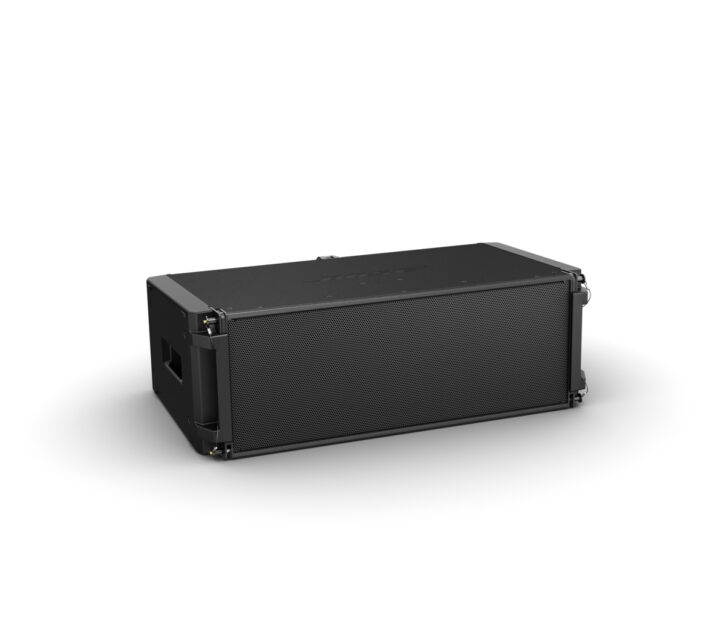 Complete with the ability to vary directivity in each array module, the Bose Professional ShowMatch SM5 DeltaQ features field-changeable 70-degree and 100-degree waveguides. These can be combined to produce asymmetrical coverage patterns. An optional 55-degree waveguide is also available. Each unit is fitted with four Bose Professional EMB2S compression drivers and two 8in. neodymium high-power woofers. Threepoint “quick pin” rigging facilitates setup for as many as 24 array modules. Splay can be adjusted from 0 to 5 degrees in 1-degree increments, and the side rigging guard and hand holds can be removed.
 The compact, arrayable point source Blaze Audio CCA10 can unobtrusively cover a medium-sized venue or be used in larger numbers for granular control on more expansive systems. This model has a coaxial compression driver with a frequency range of 420Hz to 18kHz along with twin 10in. high-excursion, ultra-low distortion drivers that extend bass response down to 52 Hz. The bi-amp capable, polyureacoated Baltic birch plywood housing provides 20-degree vertical and 160-degree horizontal dispersion. The front is protected by a 14-gauge perforated steel grille with a powder-coated black finish.
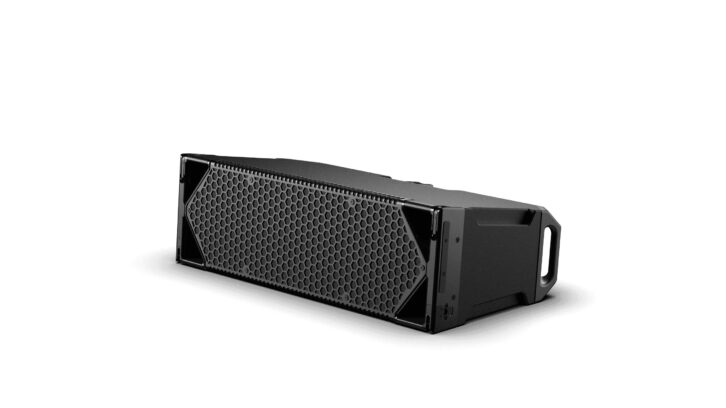 The Cohesion Audio CO12 three-way large format line array element can deliver precise 80-degree or 120-degree constant horizontal beamwidth, and it is constructed to be tough with weather-resistant components. Twin 12in. cone drivers work with two 3.5 in. voice coil compression drivers and a pair of 1.75 in. voice coil compression drivers to produce a +/- 3dB frequency response of 42Hz to 16kHz. This low impedance system has a single male EP-8 connector at the input and a maximum output SPL of 150dB. Each module weighs-in at 132lbs. making it perfectly suitable for temporary touring setup or permanent installation.
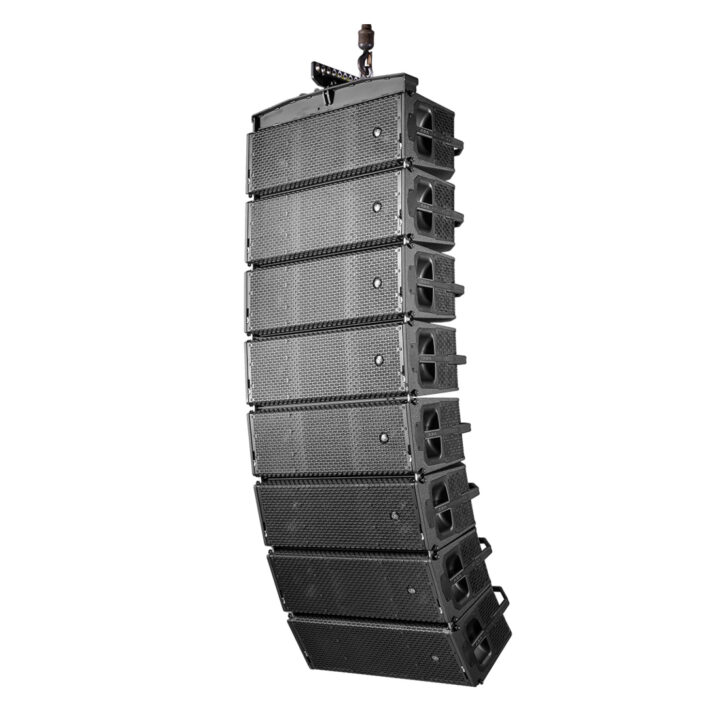 For medium and larger size performance spaces, the DAS Audio MARA-80 self-powered line array system can deliver 144dB SPL over an 80-degree horizontal coverage area. Each unit contributes to this with two 10in. woofers and twin cardioid configured 6in. drivers. For the high end, there are two M-78N compression drivers with 3in. voice coils and an 80-degree dispersion waveguide. The onboard power is supplied by a MARA Class D amplifier with a total of 4200 W RMS across its six channels. Arrays can consist of as many as 24 MARA units and 16 MARA-SUB units.
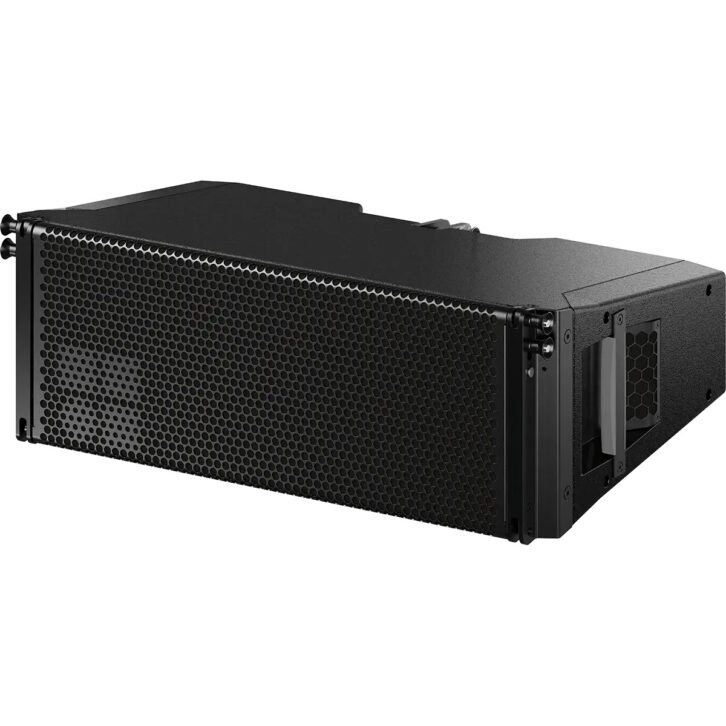 The d&b audiotechnik CCL12 compact line array system is primarily used in small to medium volume areas, and its CCL Flying frame allows up to 24 cabinets to be flown for 120-degree horizontal dispersion. The frequency response is 62Hz to 18kHz. Each housing is fitted with two 7in. neodymium forward LF drivers, two 5in. neodymium side-firing LF drivers and two 1.75in. exit compression drivers for the high end. In the array, the units can be set for zero to 14 degrees in one-degree increments. The enclosure is injection molded (ABS Polycarbonate) with a weather-protected 2K finish.
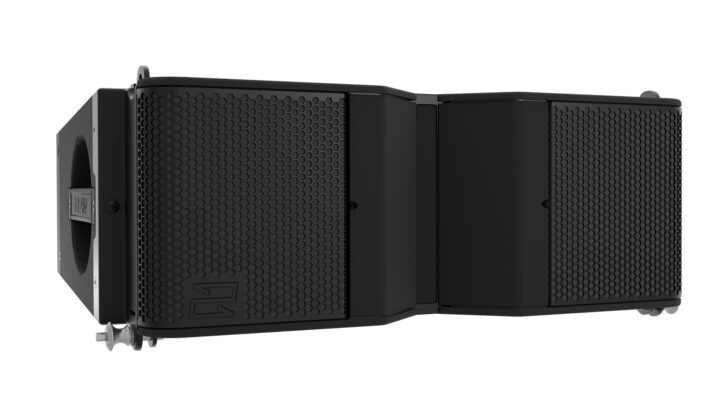 With a level of flexibility essential to success over a huge range of sound spaces, the EAW NT206L can be flown in hanging arrays, ground stacked, or even pole mounted to suit the venue. For shows that need to travel light and setup/ strike fast, the Baltic birch, steel, and aluminum cabinets have lightweight durability. The analog input interface simplifies setup, while adjustable horizontal directivity allows creative asymmetrical coverage patterns. Each 32lb. enclosure houses two 6.5in. woofers and a single HF transducer with a 1.75in. voice coil. The active design produces 1500W internal power.
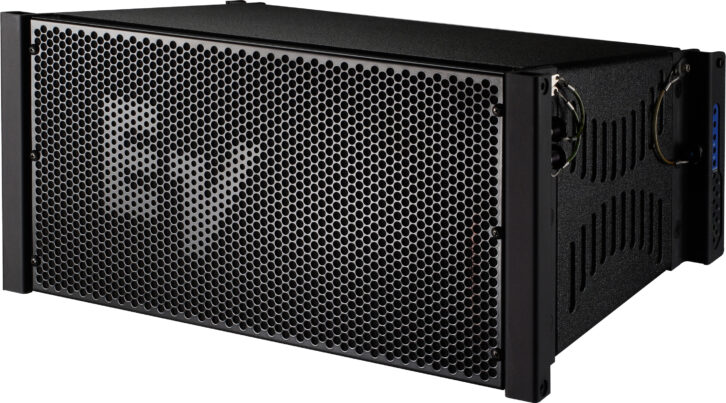 The choice of bi-amp or full-range operation is the basic feature of the Electro-Voice XLE181 compact line array element. The horizontal dispersion is 120 degrees, and the vertical pattern is array-dependent and software-definable. Each element has 200W LF and 80W HF continuous power handling. The housing is 13-ply birch plywood with fiberglass under the Electro-Voice EVCoat, and the grille is stainless steel with powder-coat paint and hydrophobic cloth to resist moisture. Output is driven through an 8in. neodymium LF transducer and two neodymium 2in. voice coil compression drivers. These are united through twin hydra plane wave generators into a 120×10- degree waveguide
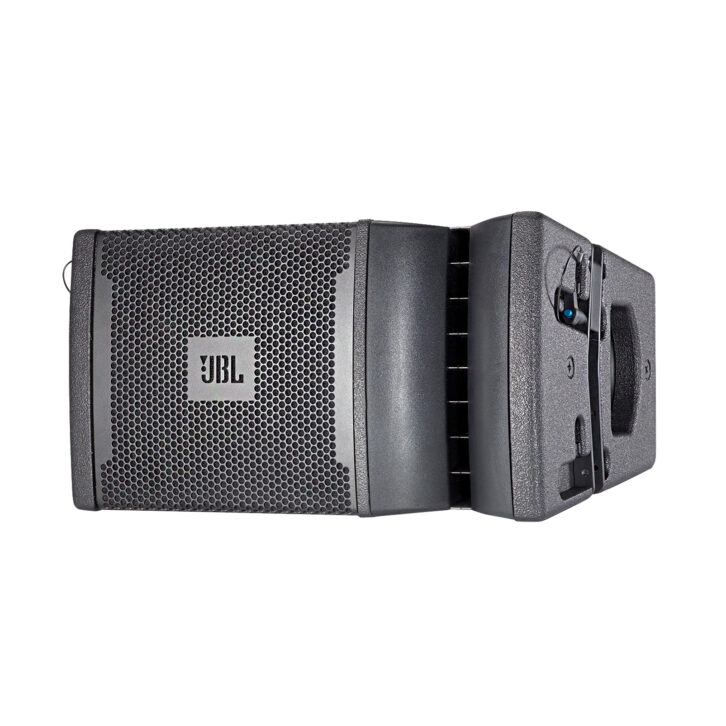 Little brother of the VRX932LA line array element, the JBL VRX928LA is a compact product designed to fill smaller venues in arrays of up to six passive 8-ohm units. This two-way system is composed of one 8in. JBL 2168H-1 Differential Drive woofer and two JBL 2414H neodymium compression drivers. Capable of 122dB SPL in passive mode, each element is equipped with a Neutrik Speakon NL-4 connector mounted in birch plywood and covered with a black DuraFlex finish. The grille is powder coated black 18-gauge perforated steel with an acoustically transparent black foam backing.
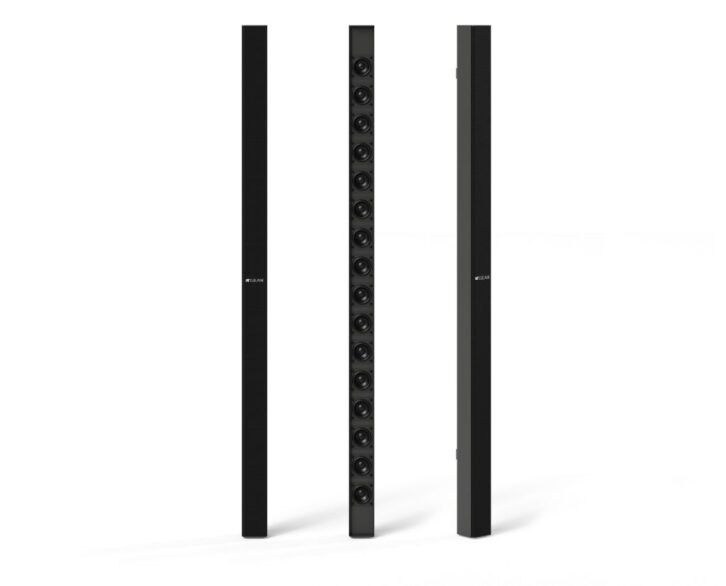 The next best thing to having sound emanate from an invisible source, the KGEAR GF162T I is an array composed of 16 2in. ferrite magnet woofers enclosed in a column less than 3in. wide. It is available in black or white finish, and when in place, the array can blend right into the architecture. These thin columns are especially useful in traditional churches with stone walls and pillars. The integral transformers allow the unit to be used in large numbers on a 70/100V system, where its 115dB maximum SPL covers a 7-degree vertical and 90-degree horizontal pattern.
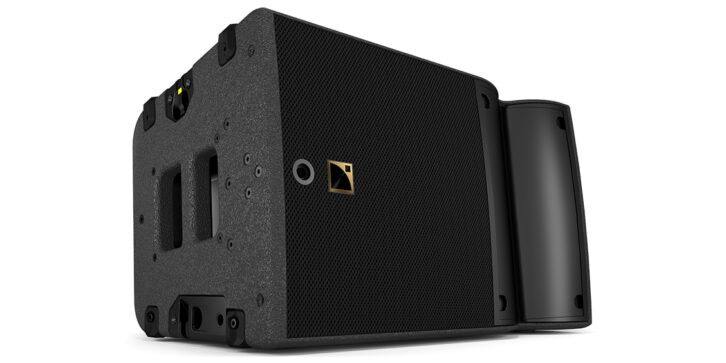
Part of the A lineup, L-Acoustics A10i Focus can suit a large variety of sound spaces with the capability to be flown in vertical or horizontal arrays, stacked, or pole-mounted. Each enclosure can be configured for 10 or 30-degree coverage options and adjustable waveguide configuration. It is a passive 8-ohm 2-way system featuring a single 10in. cone driver and a 2.5in. diaphragm compression driver. The integral L-fins produce 100/70-degree symmetric coverage or a 90-degree asymmetric pattern with a maximum SPL of 140dB and -10dB frequency response of 66Hz – 20kHz.
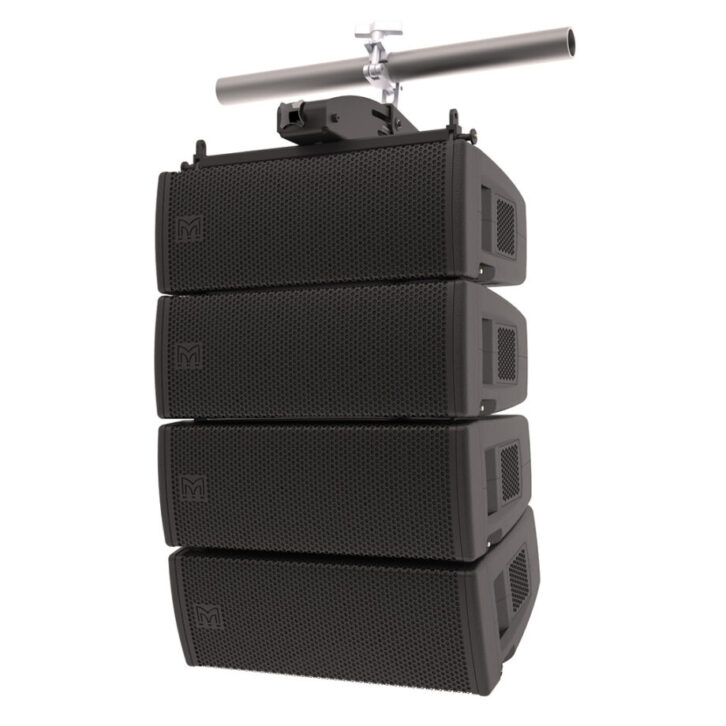 An award-winning active array element with multi-cellular DSP and digital networking, the Martin Audio MLA Mini uses separate Class D amplifiers to power each cell. Automatic and accurate DSP configuration is made by DISPLAY2.1 intelligent software, while vertical coverage is tweaked electronically. The flying system permits up to 16 MLA Mini units or 12 MLA Mini elements along with 3 MSX enclosures to be easily rigged and flown. The enclosure’s peak SPL of 130B covers a horizontal angle of 100 degrees (-6dB) and delivers a (+/-3dB) frequency response of 76Hz-18kHz.
 In the nearly four years since its global debut on Ed Sheeran’s + – = ÷ x (“Mathematics”) tour, Meyer Sound PANTHER has been a blockbuster success. It was the company’s most significant introduction in more than a decade, bringing over 150dB with Class D amplification to a remarkably compact cabinet. The first permanent installation went into the Xcel Energy Center (Sound Associates) in St. Paul, MN, home of the NHL Minnesota Wild, and there have been many more since. Drawing on sister Meyer technologies, the compact, sustainability-oriented PANTHER provides an acoustic output closer to the significantly larger and heavier LEO line array loudspeaker and occupies the slender form factor of the LYON line array loudspeaker. The innovations include an all-new electronics module, new cone and compression drivers, and a lightweight design utilizing advanced magnet structures and new materials. Despite stadium-level performance and IP55 weather rating, PANTHER weighs just 150 lb (68 kg). A dual analog/Milan AVB network input module offers flexible signal distribution options.
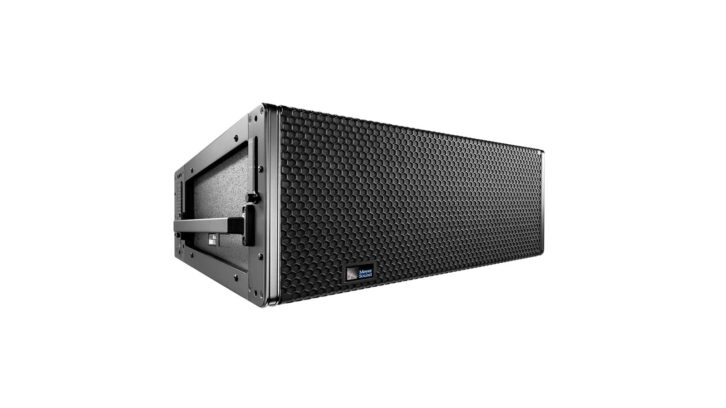 Lightweight design and low stage profile are key features in the Meyer Sound Leopard line of speakers that enable brisk setup and tight control during operation. For a wide 100-degree horizontal coverage pattern, the original Leopard is the choice, but for tighter patterns and challenging spaces, the Leopard-M80 narrows that horizontal angle to 80 degrees. The two can be flown together for asymmetrical coverage. The Leopard units are self-powered with an integral Class D amplifier, and the addition of the 900LFC lowfrequency control element extends bass considerably. Colored finishes and weather protection are among available options.
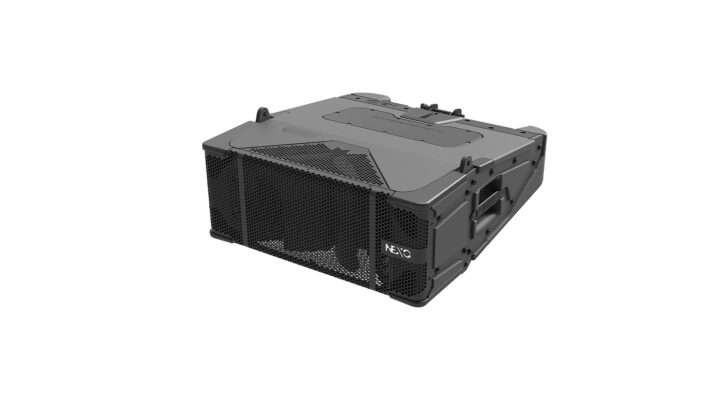 Two 8in. high excursion 16-ohm neodymium LF drivers, twin HF compression drivers, and REDLockTM rigging team up to say smaller is better with the NEXO M28 compact array module. These produce a frequency response of 65Hz19kHz (+/-3dB) and a 141dB peak SPL. There is a range of possible customized combinations using the M28 in conjunction with other Nexo array components. Nexo’s NS-1 is a simulation tool that can be used to configure and optimize the M28 and other system elements. Compass RigTM enables pre-setting of the inter-cabinet angle to adjust vertical coverage.
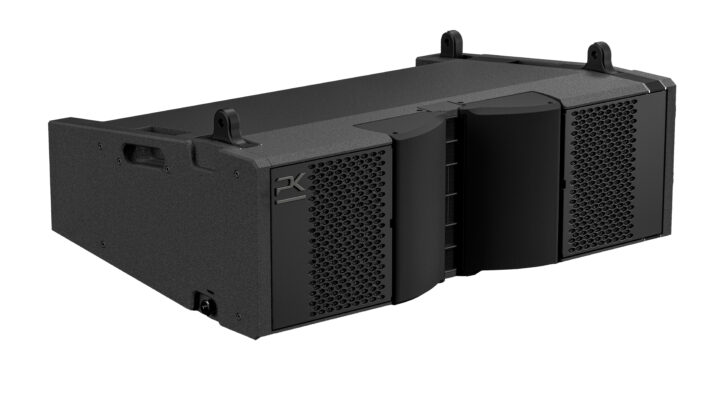 The PK Sound T8 robotically controlled line element combines a pair of vented 8in. Tetracoil LF transducers with a 3in. dual ring radiator coaxial compression driver for mid-range and a 2in. variant of that compression driver to handle HF output. A distinctive feature is the ability to remotely control horizontal directivity between 60 and 120 degrees in real time by manipulating its waveguide from a control point. A combination of FIR and IIR filters acts to smooth frequency response over the entire acoustic space. High-grade Baltic Birch forms the cabinets, and the grill is powder-coated aluminum
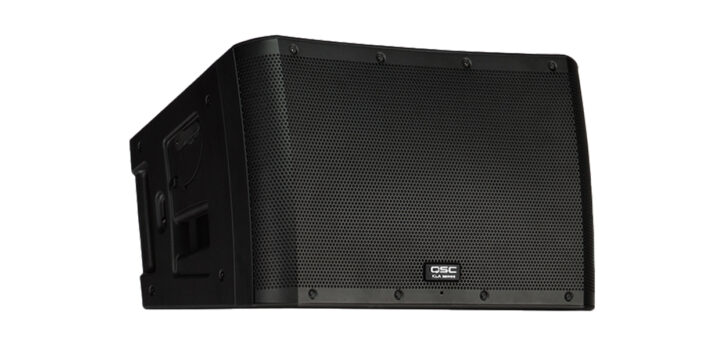 With the aim of matching big power with ease of use, the QSC KLA12 normally teams with the KLA181 18in. subwoofer to form the KLA line array system. Whether mounted in the SOLO (Single-Operator Logistics) Rigging System or Tilt-Direct 35mm pole socket, the component uses balanced, line-level XLR inputs and powerCON AC in and out connectors along with LED indicators marked Signal and Limit. There are also discrete LED indicators for Power/Standby status. Power is applied through a Class D 500W x 500W power module that drives a 12in. woofer and 1.75in. diaphragm compression drive. The system produces a frequency response of 49Hz18kHz (-6dB).
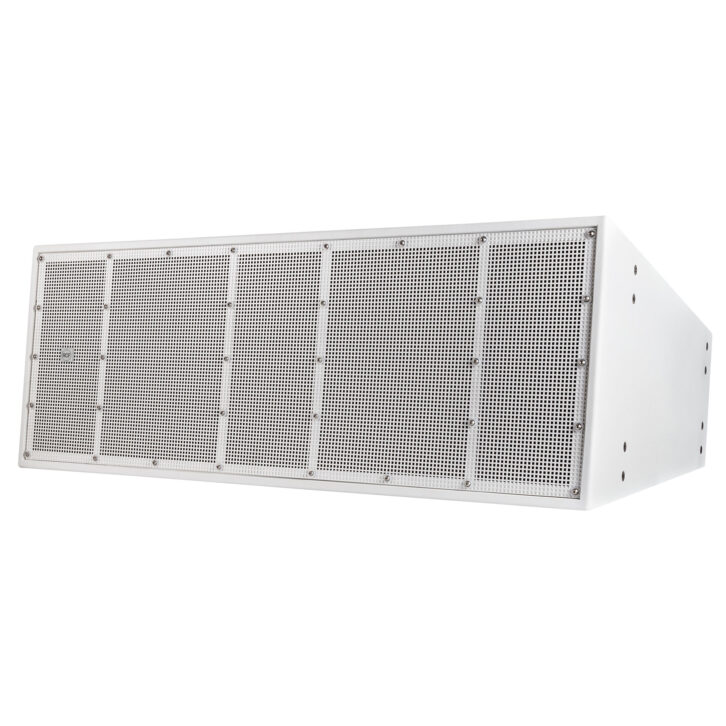 Large venues with outdoor weatherization and long-throw requirements are the application for the RCF HVL 15-L three-way, bi-amp loudspeaker system. Two 15in. neodymium magnet HVL Series woofers, twin 10in. mid-range transducers, and a pair of 4in. voice coil, titanium dome compression drivers compose each high-power unit. The system handles 1000W RMS power on the LF end and 900W on mid/high for an SPL of 144dB and frequency range of 43Hz to 18kHz (-10dB). The coverage pattern created by these components is 90 degrees horizontal and 30 degrees vertical. The Baltic birch plywood housing is weatherproofed with a textured, polyurea coating.
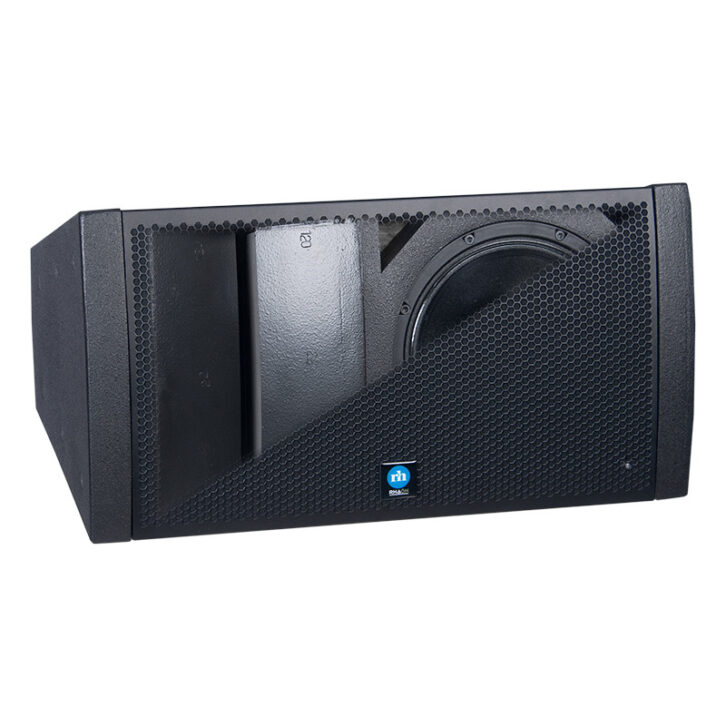 The Renkus-Heinz VA101-7 point source line array speaker can be used in vertical or horizontal arrays and is capable of ground stacking as well. Fitted with integral SA1250 amp modules, the devices use a single 10in. LF woofer and a single or pair of HF compression drivers, depending on the need. They are fed through the company’s Tuned Conic Diverter WaveGuide. Variants include 60, 90, and 120-degree standard configurations, and the transitional WaveGuide options enable 60/90 degree and 90/120-degree coverage patterns. There is also an externally powered version designated as the VX101-7.
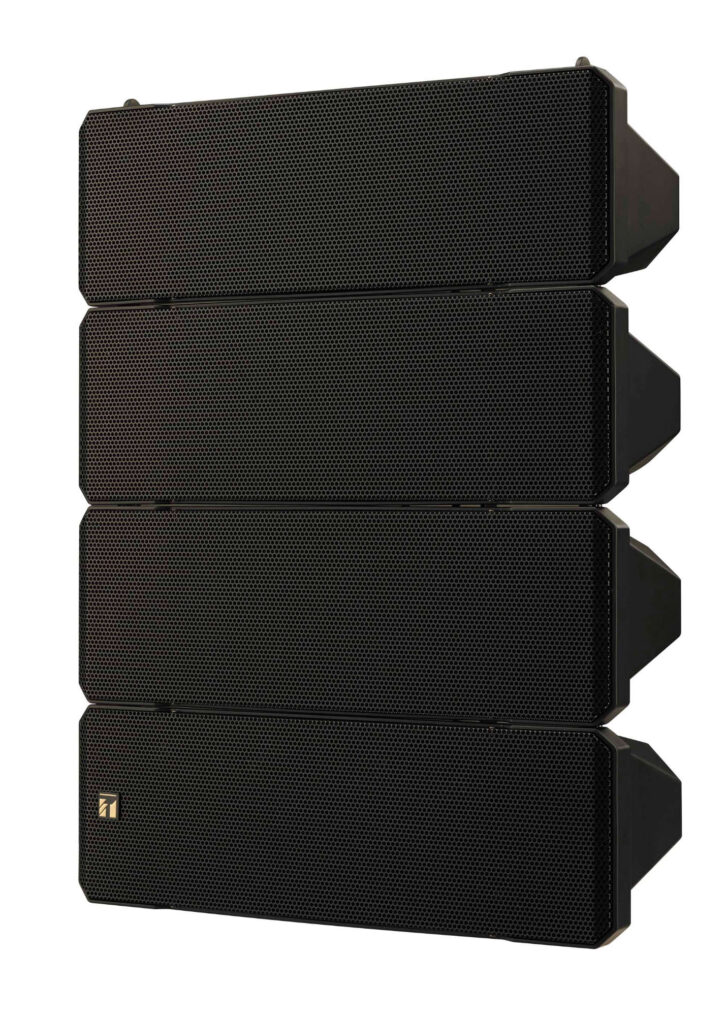 A built-in isophasic wavefront control horn optimizes the 1in. HF compression driver in the TOA Electronics HX-7 enclosure that is used in four bass reflex module arrays, each of which is individually adjustable. Working as an 8-ohm unit, each array delivers 75Hz-20kHz frequency response while enclosed in a polypropylene cabinet with a punched net, surface-treated steel plate grille. Steel hanging brackets ensure safe installation of the 66lb. arrays and the system handles 750W continuous power. Connectors include two Speakon NL4MPXX and M4 screw terminals. The HX-7 variants are available in black or white finishes.
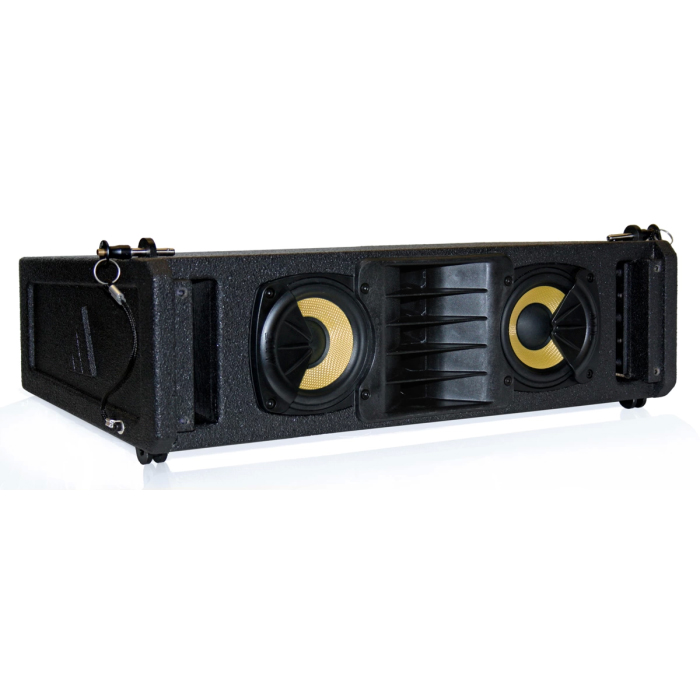 Line arrays are most often envisioned in large venues but the VUE Audiotechnik al-4 can fit well into a small space and fill it with big sound. Designed with two 4in. Kevlar cone neodymium woofers and a single 1in. exit neodymium compression driver with its Truextent Beryllium diaphragm. This model’s 90-degree horizontal coverage angle can be adjustably complemented on the vertical depending on the number of units used. As many as 24 can be hung from a single flybar. The 19.9in. housing width allows it to blend visually with no blocked sightlines.
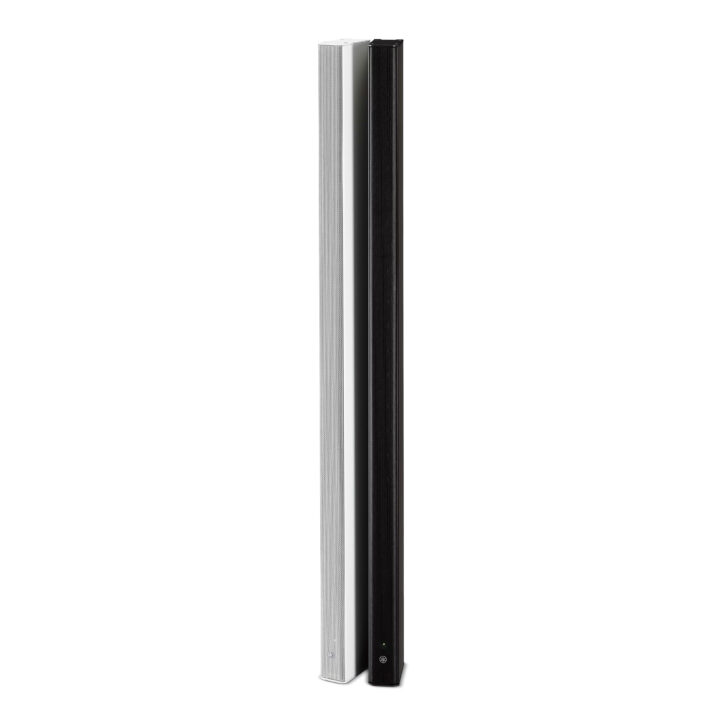 Conference rooms demand a natural-sounding speech environment, and the Yamaha VXL1B16P/VXL1W-16P (black/white) has made a name for itself in that realm with Dante connectivity and PoE power. Sixteen 1.5in. full-range, neodymium magnet drivers pump out 15W with an IEEE802.3at PoE device or 6W running on IEEE802.3af type PoE. A PoE-compliant L2 switch enables the speakers to be operated as a network device. The column’s small size and the wide assortment of available attachment devices allow them to be mounted in any location that suits the room acoustics and décor.
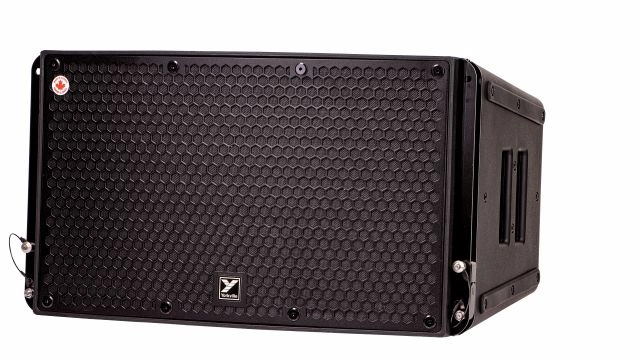 In July, the next generation of the Yorkville Sound Paraline series with four new compact powered enclosures. The full-range PSA26 and PSA28 combine Tom Danley’s patented Paraline Lens and Synergy Horn technologies to minimize comb filtering while maximizing efficiency and directivity. They also feature lightweight neodymium drivers, tone shaping controls, onboard limiting, and integrated rigging hardware. The PSA15S and PSA18S subwoofers are designed to pair with the top boxes, and offer 3000 Watts of peak power in 15” or 18” woofers. All four new models are IP54 rated and built at Yorkville’s factory in Pickering, Ontario.