Tell us a little bit about yourself: How did you get started in broadcast sound and how did you get to where you are today? What do you love about your job?
This was post-pandemic. I’d been working for about eight years, split between freelance sound engineering for live music and being a deputy head of sound for various musicals in the West End. I’m very grateful for that time. I learned how to run a department, not just technically but in managing people. During the last six months of my time in theatre, I started to think seriously about my options, and I couldn’t have made the move without the community of women sound engineers I turned to. They gave me so much support through that transition. My first ever OB was at Chelsea, working for NEP. It was definitely a challenge at the start, but I’m so glad I persevered.
What I love most about my work is the people I work alongside. I’ve genuinely met so many fantastic colleagues, people I admire professionally and have learned from, but who are also excellent human beings. It’s a joy to work with them. I also really love learning about broadcast specific equipment, and being part of the team that makes it possible for the public to watch these sporting events across the country and the world. It makes me feel incredibly happy and proud of what we do collectively.
How long have you been part of the Wimbledon broadcast operation, and how has your role evolved over that time? What did this year look like for you?
This is my second year as part of the sound team, working as sound supervisor for Amazon Prime. Last year was really about finding out how everything was structured and what was expected of us. This year has been more about how we set up and plan effectively, so we can take what we did last year to a different level. We did encounter some challenges last year, but they were quickly solved as a team, and Amazon and S+V have also been fantastic at implementing changes to make sure this year’s transmission was even better than last year’s. This year I thought a lot more about the long term, how we do things in a way that builds year on year, not just what gets us through the fortnight.
How do you approach planning such a prestigious broadcast event? What are the key milestones?
It’s about consistency, and being able to work as a team to deliver a cohesive product across all the matches on the different courts. For us that’s all about teamwork. There are five of us, and we get together at the start to plan how we’re going to operate throughout the tournament. A lot of the groundwork is done by production, the sound assistants, and our guarantees, who’ve been on site for weeks before we even set foot there.
What do you enjoy about mixing tennis and how does it differ to other sports you’ve covered?
As a sound engineer with a background in live music, mixing different sports is a bit like mixing different genres of music. But with tennis, and Wimbledon especially, my job isn’t just about the matches. It’s about translating the whole experience of the place. There are the quiet moments on court, a commentator almost whispering right before a set point, and then the crowd erupting. That’s about dynamics and anticipation. But there’s also everything around the matches: the village summer feel, the hill, the atmosphere between points, the sense of occasion. Getting all of that across, not just the ball being hit, is what makes it different from football, where it’s really about building and sustaining energy throughout, a much louder, more continuous environment.
Remote working is now an established part of the broadcast landscape. Beyond the obvious logistical advantages, what does it actually demand from you as a sound engineer, and what new challenges does it present?
In my experience it requires being a lot more thorough with your checks. The real challenge is the extra layers of communication you have to go through when troubleshooting from a remote position. When I’m supervising, I like to familiarise myself with my setup on site. It helps me visualise and troubleshoot far more effectively. That’s obviously not always possible remotely, so it becomes about trusting the team on site and communicating clearly.
How do you think the industry can encourage more people – and more women – into Sound Supervisor roles and where are the barriers?
We need to approach this from the root. We need more women in sound assistant roles first. Working in OB isn’t always easy on the body, and it can be pretty daunting even if you already have experience as a sound engineer in other industries. I’m so grateful for the community of women in broadcast I’m part of, where no question is too silly and no topic is off limits. We support each other, share advice, and solve problems together. Most important of all, it’s a safe space.
Second, there aren’t enough training opportunities outside traditional full-time progression. A big chunk of the OB workforce is freelance, and for freelancers that route to progression isn’t really there. Productions want to hire experienced sound supervisors, and rightly so, but we also need to look after the talent pipeline, not just for women, but for everyone who could be tomorrow’s sound supervisors. The gap between sound assistant and sound supervisor needs addressing. It’s not just about gender parity, it’s about making sure people can get qualified and have real opportunities for career progression.
I’m also glad to see the support and openness of my male colleagues growing year on year. It makes me optimistic that we’re moving towards a point of equilibrium. We’ll continue working hard to cement our place in the industry.
Which Calrec console are you using, and which features do you rely on most heavily in a live sport environment?
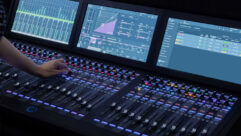
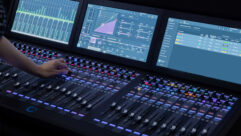
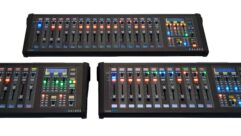
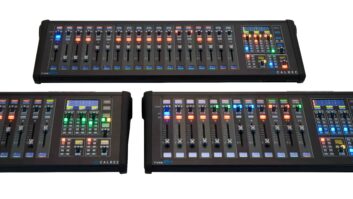
At the moment, I’ve got a Brio. What I rely on most that’s specific to broadcast, rather than general mixing, is the automatic mix minus and off air conference bus, feeding IFB and talent returns without feedback. I also rely on the Hydra2 networking, which lets the desk sit on a shared broadcast audio network and talk to Dante, AES67, MADI and SDI. That’s what’s genuinely different from anything I used before I moved into broadcast: integrating into the wider OB infrastructure, not just processing channels.
How do you see your needs evolving – what can today’s desks do that would have been unthinkable when you started out?
Well, I’m not a spring chicken anymore. I learned on analogue, so having an automixer, with no external EQ or dynamics required, would have seemed a stretch when I was starting out. The other big shift is how normal remote, and IP based working has become. Production that used to require everyone on site can now run over a network, with the desk itself sitting on shared broadcast infrastructure rather than being a standalone box. Automation has moved the same way: snapshot recall, automixing, and desk settings that travel with you rather than being tied to one physical surface.
Are there any particular Calrec features or capabilities that prove especially useful for handling unique challenges at Wimbledon?
Snapshot and memory recall with channel isolate protection lets you load a new match or court configuration quickly while protecting specific channel settings from being overwritten.
No DSP sharing. Every channel has full EQ and dynamics available at all times, which is useful when configurations change fast across courts.
How has sport audio coverage changed since you started your career, and where do you see it heading in the next five years?
I’ve only been in broadcast three or four years, so I can’t speak to decades of change, but even in that short time I’ve seen things move. IP based working has gone from something niche to just how things are done. Audio sits on a network now rather than everything being point to point. Remote and cloud-based production have grown a lot too, and I think that’s only going to continue. I’m also aware immersive audio, Dolby Atmos particularly, has become standard at a lot of major sport broadcasters, even though it’s not something I’ve worked with directly yet. Where I see it heading in the next five years is more of that. More virtualised, network-based setups, and immersive formats becoming normal even outside the very top tier of events, as it gets cheaper to deliver.
Sport audio is often described as invisible when it’s done well. What does “done well” actually look like, and how do you know when you’ve achieved it?
In my opinion, it must feel natural, smooth transitions. As for how we know when we’ve achieved it: good question. We’re our own worst critics. There’s always something where I think, “I could have done that better, easier, more seamlessly.” With every transmission we strive to do better, and we should never stop thinking about what could be taken to the next level. That’s the beauty of the job, it’s about the journey. I suppose we know we’ve achieved it when no one complains.
On the other hand, having a compliment for another person that knows about audio or is a sound engineer themselves is always a good sign and a tangible tell that you’ve done it right.
How much of your work is planned and how much is instinct? When something unexpected happens on court, what does your decision-making process look like, and how does the Calrec console help you in those moments?
Planning is essential. You can’t react effectively if you don’t have a plan when something goes wrong, that’s why communication with the rest of the team matters so much: if X happens, this is plan B. I don’t like to rely on instinct alone. Being able to set the desk up the way my brain works best, we all have our own particular way of working, means I can react with a cool head, using a setup that’s familiar no matter where I am. That flexibility matters.
Big sports broadcast events have extended their reach across streaming and social channels to provide more fan engagement. Has this affected how you approach your mix? If so, how?
Not so much really, for me it’s about delivering the best quality mix I can, so that the people in post have an easier time preparing short form content for social media afterwards. I always check my mix on different speakers to try to get a sense of how it might translate for fans at home or on their phones.
What have been the key technological milestones you’ve witnessed in your time in broadcast audio and how have they changed what you do and how you work?
I’ve only been in this side of the industry for about four years, so I haven’t seen decades of change, but even in that short time I’ve watched things shift toward IP. Audio running over a network rather than everything being cabled point to point. Remote production has become a lot more normal too. Things that used to need everyone in a truck on site can now be run from somewhere else entirely. And I’ve seen immersive audio go from something niche to something a lot of the bigger broadcasters are taking seriously.
Its changed the way I am positioning and training myself, it’s important to identify the industry shifts and look for opportunities to implement these new aspects in my workflow and acquiring new sets of skills.
What advice would you give to someone who’s just starting their audio engineering career?
Be curious and stay curious. Find what actually makes you happy and where you feel at home. Look for support, champions and mentors you can go to for advice without feeling judged. Be flexible, and don’t be afraid of starting from the bottom, you’ll need that grounding to build a strong foundation. And keep knocking on doors and training yourself, so that when an opportunity opens up, you’re in a better position to prove you have the skills, or that you’re already working towards them.